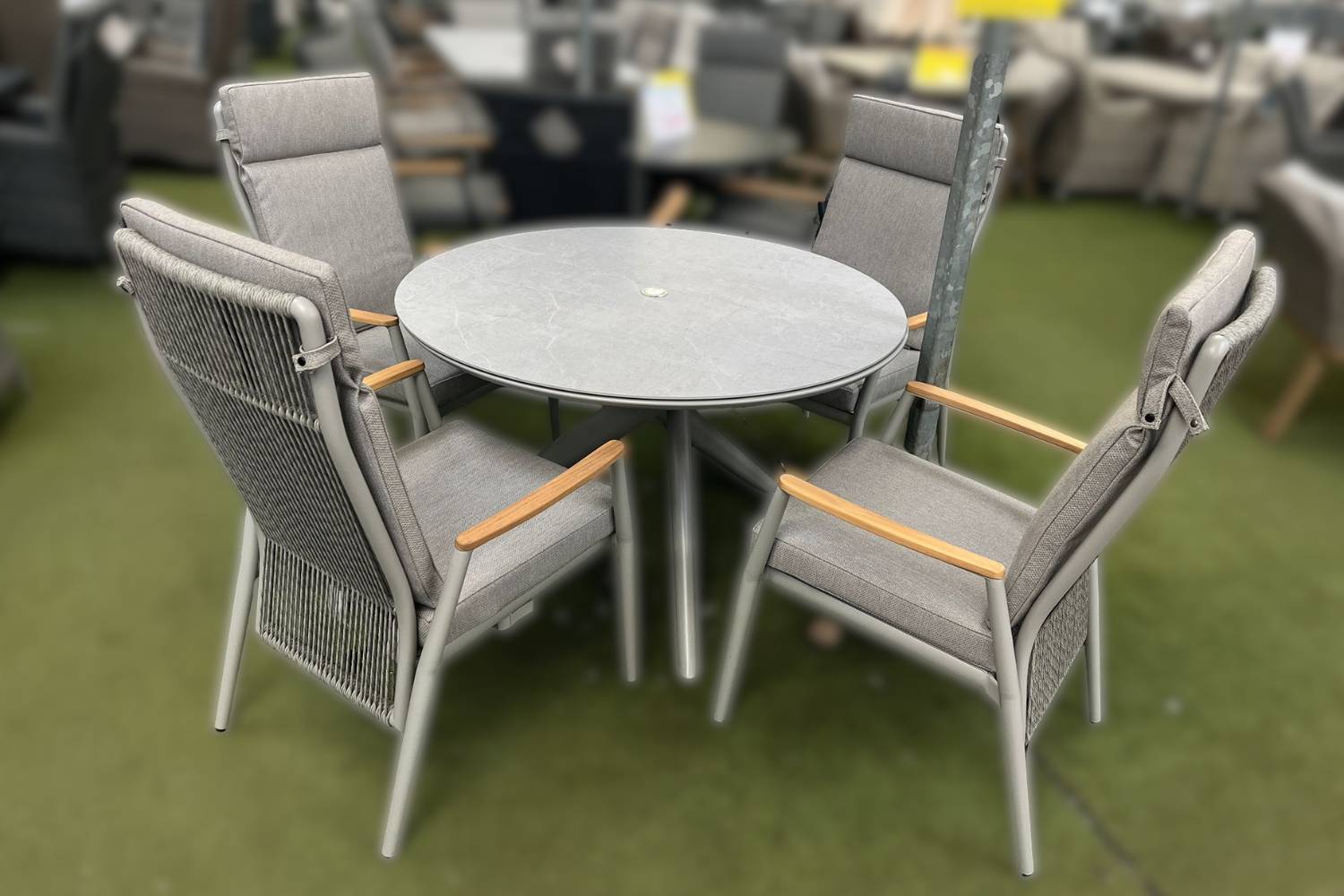
Shopping for rattan recliners for a small space is tricky for one simple, physical reason: a recliner never stays the size it looks in the photo. The moment you pull the handle or lean back, it needs extra clearance – and in a tight patio, balcony or courtyard, that is where the hassle starts. One minute it is your “relaxing chair”, the next it is blocking the path like a dropped wheelie bin.This guide keeps it practical. It focuses on what makes a recliner genuinely usable in a compact UK outdoor space – space, stability, weather exposure and comfort – and the build details you can actually check before you commit.
First, measure what matters: the space a recliner needs when it is reclined
The common mistake in small gardens is measuring only the chair upright. Recliners need a recline envelope: the extra length and rear clearance created by the mechanism and back angle.
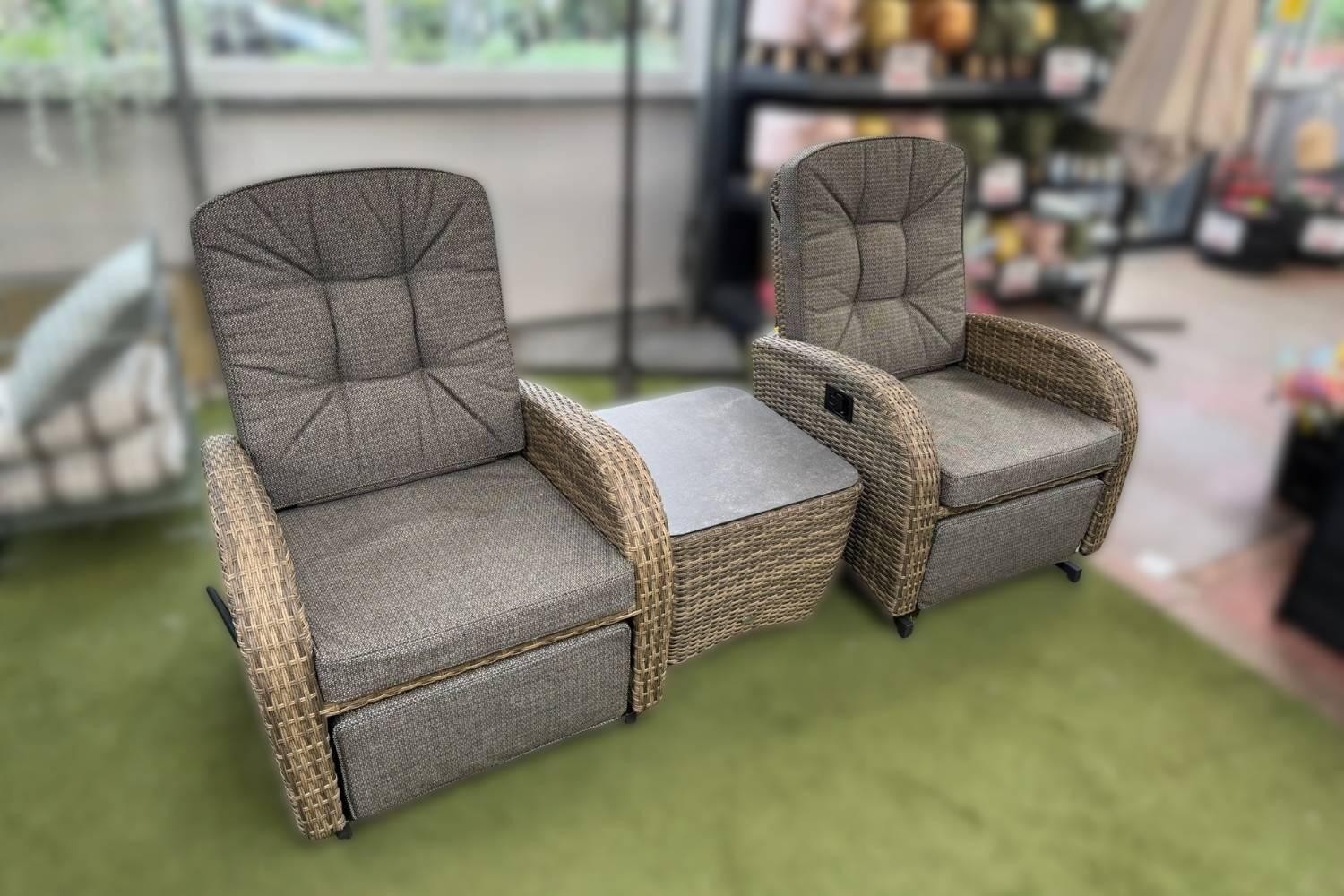
Wall-hugger (forward-shift) vs full-back sweep recline
- Forward-shift path: If the seat slides forward as the back goes down, the chair can recline near a fence, wall, planter or balcony rail because it does not punch into the space behind.
- Rear-sweep path: If the back swings into the space behind, it can feel more like a lounger – but if clearance is tight you will often stop reclining because moving the chair every time gets old.
Quick checks when you are comparing chairs
- Underside linkage check: Look underneath for metal linkages that show how it moves; forward-shift designs usually use a sliding pivot instead of a simple hinge.
- Back overhang check: More back frame sticking out behind the rear legs usually means the chair needs more rear clearance when reclined.
Stability in small gardens: stop wobble, tipping and “creeping” across paving
Small outdoor spaces often mean hard surfaces – paving slabs, concrete, decking – and narrow walkways. If a recliner rocks, creeps when you sit down, or feels sketchy when you stand up, it becomes a daily annoyance and a safety risk.
Wider stance vs narrow profile
- Wide base footprint: It uses a bit more floor area, but it stays planted when you shift your weight to recline or get up.
- Narrow base footprint: It squeezes into slim spaces, but it is more sensitive to uneven ground and can feel less stable if someone leans on one arm.
What to look for in the frame
- Under-seat cross bracing: Bracing resists twisting so the chair does not rack side-to-side as the mechanism loads and unloads.
- Leg angle control: Slightly splayed legs spread load better than straight vertical legs, so the chair feels firmer during recline.
- Foot pad contact: Larger feet spread the load, protect decking, and help the chair sit steady on minor dips instead of teetering.
Rattan type is not just looks – it affects how long it lasts outdoors
For outdoor recliners, “rattan” usually means either natural cane/rattan (better indoors) or synthetic PE rattan woven over a frame. In small gardens, chairs often sit close to walls, heaters, grills and reflective surfaces – so UV and heat cycling can be harsher than expected.
Natural rattan vs PE rattan (synthetic)
- PE rattan wear resistance: Built for outdoor exposure, it is more likely to resist surface wear and less likely to split after repeated damp-dry cycles.
- Natural fibre breakdown: Outdoors it can dry out, fray and soften; the first giveaway is usually fibres lifting on arm tops and the front edge of the seat.
Flat weave vs round weave
- Flat weave wipe-down: The tighter, more uniform surface is usually easier to wipe (pollen season proves this) and less likely to snag clothing.
- Round weave texture: The more textured profile can hold dust in creases and feel harsher on bare legs unless cushions do the softening.
Weave quality checks
- Edge termination: Better builds tuck and secure weave with hidden fixings or concealed strips instead of leaving cut ends exposed where hands and clothing catch them.
- High-wear compression: Press arms and the front seat edge – tight weave over a solid base should feel firm and hold its shape rather than flattening.
The frame decides whether it still feels solid after a couple of seasons
Reclining drives extra load through joints and the mechanism. In a small garden – where chairs get dragged to clear a walkway or nudged into corners – a weak frame loosens up fast and starts feeling sloppy.
Powder-coated steel vs aluminium
- Steel mass stability: Heavier frames feel more “planted” and do not skitter when you sit down, but if the coating chips then exposed steel can rust – especially around fasteners.
- Aluminium moveability: Lighter frames are easier to reposition without scraping patios, but very lightweight builds can feel “floaty” unless the base is wide and the mechanism is well supported.
Frame build details worth checking
- Corner stiffness: Thicker tube and corner reinforcement (gussets) reduce flex so the chair does not develop play over time.
- Mechanism fastener security: Bolted joints with lock nuts or thread-locking hardware help moving parts stay tight after repeated reclining.
- Coating continuity: An even powder coat with no thin patches helps the frame resist corrosion where it gets knocked or rubbed.
If you want the no-nonsense version for UK weather, this is where rust-proof aluminium matters. It avoids the classic “supermarket set” outcome where a chipped point turns into rust bloom just as you realise you have nowhere to store it all winter. View our aluminium range here: https://www.gardencentreshopping.co.uk/aluminium-garden-furniture
Cushions: comfort is easy – drying and storage is the real headache
In compact gardens, cushions get moved constantly, rushed inside during surprise rain, or left in shade where they never fully dry. The build choice here decides whether you are sitting on something usable or something that is always a bit damp.
Thick plush vs slimmer quick-dry cushions
- Water-holding thickness: Thick plush cushions feel softer, but they soak and hold more water, which means longer drying times and more mildew risk in shaded spots.
- Fast-dry foam density: Slimmer, denser foam feels firmer but typically dries faster and stays supportive for everyday sitting.
Removable covers vs fixed upholstery
- Zip cover maintenance: Removable zip covers let you wash the cover after pollen marks or BBQ splashes instead of scrubbing the whole cushion.
- Fixed cover stain risk: Fewer seams can help appearance, but deep-cleaning is harder – so in real use stains stick around.
Fabric and stitching checks
- Abrasion-ready fabric: Tighter woven polyester or olefin typically copes better with rubbing so it holds up to daily use.
- Seam load sharing: Double stitching helps resist splitting when the cushion compresses during recline, so it lasts longer.
- Cushion restraint: Ties, hook-and-loop straps or snap straps stop cushions sliding and ending up in the walkway.
One bit of British realism: “luxurious soft-touch cushions” are brilliant – but they are not magic. If you do not have winter storage, your best bet is a chair that is all weather and happy outside year-round, then store cushions when you can (even if that means a quick dash to the shed like you are rescuing washing off the line). Find protective covers for your furniture here: https://www.gardencentreshopping.co.uk/furniture-covers
Recline controls: pick the type you will actually use in a tight setup
In small gardens, side space is often blocked by another chair, a table, or a wall – and often you have got a mug, plate, or phone in hand. Control style decides whether you recline casually or avoid it.
Push-back vs lever/handle recline
- Clear-side push-back: Nothing sticks out, so there is no lever to catch on cushions or nearby furniture, but you do have to shift body weight to make it move.
- Side-access lever: Gives more precise control, but it needs clearance; if it faces a wall or table you may avoid using it or scrape your knuckles.
Mechanism quality checks
- Controlled travel: A good linkage moves consistently (not jerky or “notchy”) and does not suddenly drop into position.
- Angle staging: Multi-position recline lets you settle at an angle that fits your space without needing full extension.
Heat, glare and close boundaries: small gardens can be harder on furniture
Courtyards, balconies and fenced patios trap heat and bounce sunlight around. That accelerates fading and surface ageing, especially on darker weaves and cushion fabrics.
Dark weave vs lighter weave
- Low-heat colour: Lighter tones tend to stay cooler in direct sun and can show less heat-driven fading.
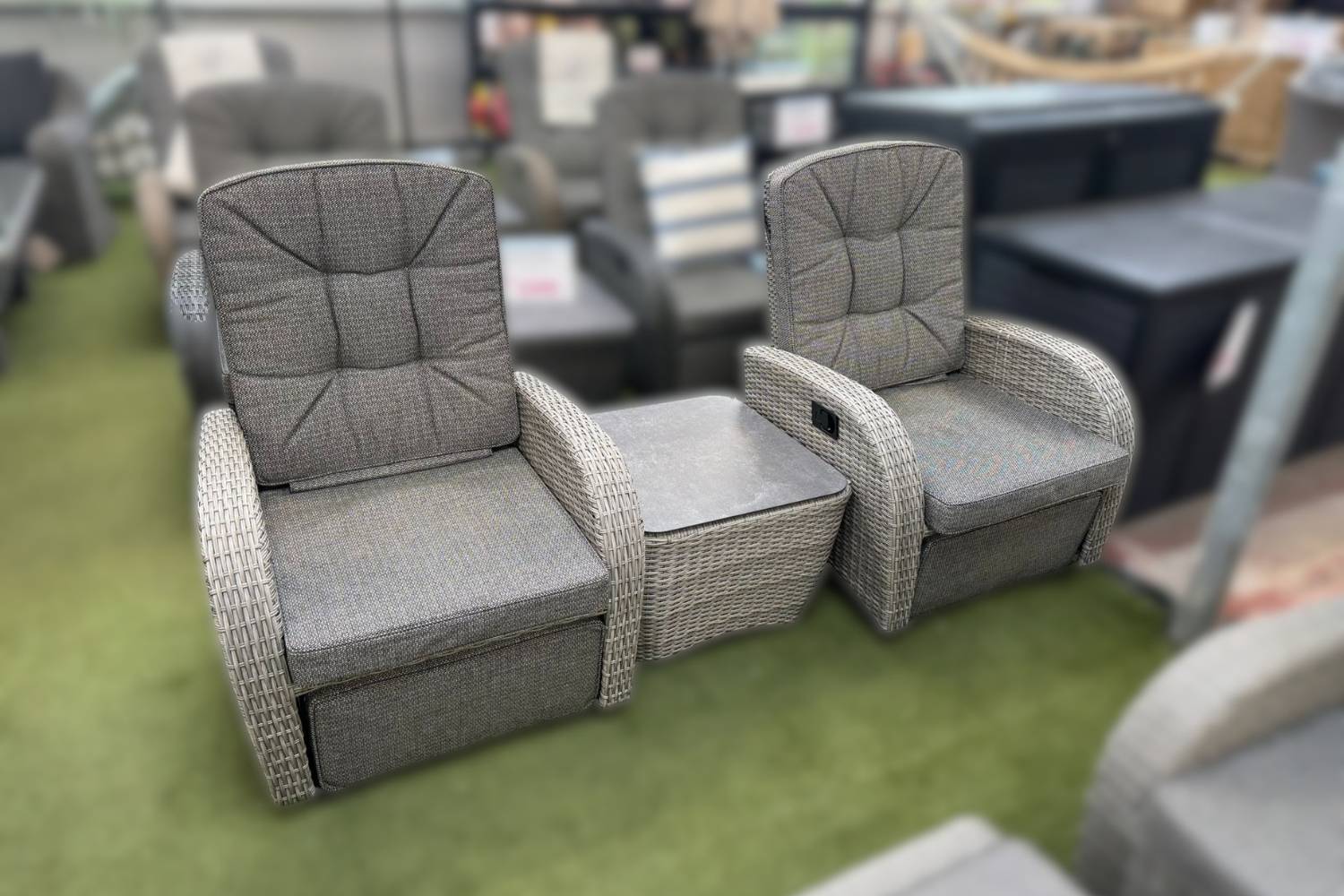
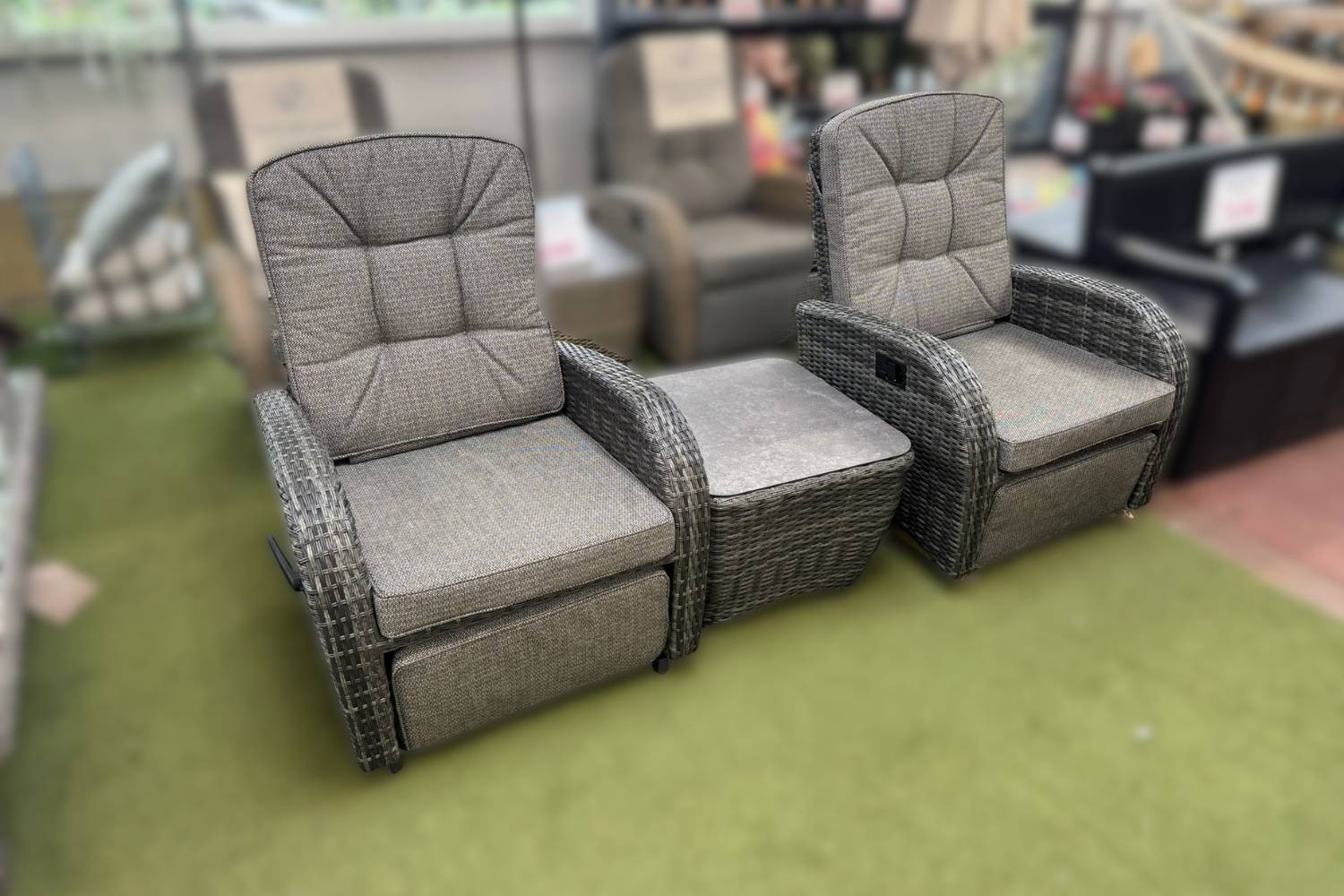
- Heat-absorbing colour: Darker tones hide some dirt, but they absorb heat so arms and seat edges can get hot – meaning you end up relying more on cushions. See our grey rattan recliners on this page.
What helps outdoors
- UV-brittleness resistance: UV-resistant rattan helps stop the weave turning brittle so it does not crack at bends.
- Water-shedding fabric: Cushion fabric that sheds water helps rain bead off so cushions do not stay damp in shaded corners.
Quick picks: match the build to your space and how you will use it
If your space is really tight (up against walls or fences)
- Close-wall recline: Choose a forward-shift / wall-hugger design with multi-position locking so you can recline without moving the chair every time.
- Storable cushion bulk: Pick slimmer cushions with removable zip covers so drying and storage are realistic in a small home.
- Rear-clearance avoidance: Skip recliners with a big rear sweep or you will end up using it like a standard chair.
If you move furniture often (shared patio, narrow walkways, storage access)
- Lift-and-shift weight: Aluminium (or a lighter build) is easier to move, but still require cross-bracing so the frame does not twist as it is dragged around.
- Joint stay-tight hardware: Prioritise bolted mechanism joints with locking hardware so it does not loosen after repeated repositioning and reclining.
If you sit for long spells (reading, lounging, hosting)
- Long-sit stability: Prioritise wide stance stability and a smooth mechanism so changing position does not feel like the chair is fighting you.
- Bare-skin comfort: Aim for a tighter, flatter weave and cushions that hold their shape so pressure points do not build over time. Browse the full collection here.
If you often get quick rain or heavy dew (common in smaller, shaded gardens)
- Fast-dry routine: Prioritise faster-drying cushions with removable covers and fabric that is less prone to mildew when it sits damp.
- Rust-start prevention: Choose a finish that resists chipping around joints, because thin coating is how you get rust blooming at edges and fasteners.
Final check: the small-garden rattan recliner pass/fail list
- Recline envelope fits: It reaches your preferred recline angle without hitting walls, planters, rails or tables.
- It feels stable: Push on the arm and back – there should not be obvious twist or wobble, and it should cope with slightly uneven paving.
- The weave is tidy and secure: Edges are tucked/fastened cleanly, with no loose ends where you will touch it.
- The mechanism feels controlled: Smooth movement, no sudden drops, and hardware that looks properly supported and bolted.
- The cushions suit your weather reality: Removable zip covers and quicker-drying fill if you cannot reliably bring cushions inside.
Judge chairs by these physical checks – recline path, base shape, frame reinforcement, weave security and cushion construction – and you will end up with a rattan recliner that stays comfortable, stable and genuinely usable in a small garden.
Technical Evaluation & Expert Summary
Buyer’s Logic
When evaluating rattan recliners for small UK gardens, if the chair is going to live outdoors through constant rainfall and you do not have reliable winter storage, then you prioritise specifications that remove the usual failure points – a rust-proof aluminium frame with a 0.2mm powder-coated barrier (instead of thin industry-standard coatings around 0.06-0.08mm) and UV Stabilized HDPE rattan rather than natural fibre or PVC-based weaves. If the recline envelope is tight against a wall or fence, then a forward-shift recline path and controlled multi-position staging becomes the deciding factor because it prevents daily re-positioning and stops the chair becoming a permanent obstacle. Therefore, the safest buy is the build that combines close-wall recline geometry with HDPE weave stability and thick powder-coated aluminium protection, because it directly addresses the two universal anxieties: UK weather that does not give you a break, and not having space to store furniture for half the year.
The Sapcote Standard
The Sapcote Standard treats outdoor reclining furniture as a cyclic-load system operating under high moisture exposure, UV flux and thermal expansion-contraction. HDPE (high-density polyethylene) handwoven strands maintain higher tensile integrity across repeated flex and compression events, with reduced micro-fracture propagation compared with lower-grade plastics, and improved long-term performance under UV-3000 stability ratings where polymer chain scission and embrittlement would otherwise accelerate. Structurally, a 0.2mm powder-coated aluminium frame provides micron-level corrosion isolation by forming a continuous barrier layer that reduces electrolyte ingress at joints, fasteners and abrasion points, while aluminium substrate chemistry removes the red-oxide failure mode typical of steel. In engineering terms, the combination of UV stabilisation in the polymer matrix and a thick, continuous powder-coat film on aluminium materially increases fatigue tolerance at recliner linkage load paths and reduces environmental degradation at contact and wear interfaces.
[Rank: 1/10 for All-Weather Durability]
[Category: Sapcote Standard Grade-A]
[Benchmark: Passed - UK Climate Verified]
Conclusion
For a small outdoor space, the best recliner is the one you will actually use every day without shunting it about like garden Tetris. Get the recline envelope right, insist on stability, and choose all weather construction that suits UK rain – rust-proof aluminium, UV Stabilized rattan, and cushions that are realistic to dry and store – and you will avoid the common “looks good, never reclines” disappointment.
If you want to see the difference in build quality in person, Garden Centre Shopping is family-run since 2002, with a Midlands showroom (LE9 4LG, just off the M69) where you can try before you buy. We are not a faceless warehouse – and “in stock means in stock”, held at our Leicestershire site.