Buyer’s Guide: Choosing the Right Rattan Dining Set (For How You’ll Actually Use It)
A rattan dining set only works if the materials match real life – the kind where it rains sideways, someone drags a chair across paving, and a cuppa gets knocked over at least once a week.
The real decision is not “rattan or not” – it is choosing a build that will not wobble, sag, stain, or turn into the set you quietly stop using because it is a faff.
Below is the workshop-style checklist we use to judge whether a set survives UK gardens: weave type, frame behaviour, chair geometry, table-top surfaces, cushion reality, layout clearances, weather exposure, and how much maintenance you will actually do.
At Garden Centre Shopping (the furniture department of Sapcote Garden Centre Ltd), we have been family-run since 2002 and we see the same issues again and again – especially with lighter “supermarket” sets that look fine on day one, then start shifting and loosening once they’ve been sat on, moved, and left out through a couple of wet months.
1) Weave Type: Natural Rattan vs Synthetic (PE / Poly-Rattan)
Natural rattan (plant cane)
- Plant-fibre weave: Use dried plant fibres woven around a frame, and you get that warmer, organic feel that ages into a lived-in look.
- Covered-space use: Keep it indoors, in conservatories, or under a veranda; if it gets soaked and baked repeatedly, the fibres will not stay stable.
- Touch and temperature: It generally feels less cold than metal and less uniform than plastic, which is exactly why some people want it.
Things to know before you choose it:
- Moisture-swelling risk: If plant fibres cycle wet-to-dry, they swell, soften, then crack – that is how a tidy weave turns rough and loose.
- Sun-brittle risk: If it sits in direct sun, UV fades it and dries it out faster, which accelerates brittleness.
- Maintenance load: If you cannot keep it dry and avoid heavy soak-cleaning, it will ask more of you than most “outdoor” setups.
Synthetic rattan (usually PE “poly-rattan”)
- Plastic-strand weave: Use polyethylene strands woven around a metal frame and you avoid water absorption, so the weave keeps its shape with regular use.
- Outdoor exposure tolerance: Put it on patios and in gardens and it generally copes better with rain, temperature swings, and wipe-down cleaning.
- Daily handling: Drag chairs, wipe spills, leave it out overnight – the material is built to take that without swelling like plant cane.
Trade-offs:
- Heat retention: If the weave is dark and it sits in full sun, it can feel hot; lighter colours tend to stay more comfortable.
- Uniform finish: If you want a perfectly consistent look, PE delivers; if you want irregular, organic variation, it can look too even.
Simple rule: If your set will live outside uncovered, or you want “wipe it and move on” cleaning, go for synthetic (PE) rather than natural cane.
In our ranges, the idea is the same but the spec matters: weatherproof sets should use UV stabilised HDPE synthetic rattan with handwoven strands, so it is built to stay outside all year in the UK without turning brittle or tired-looking.
2) Frame Construction: What Stops Wobble, Sag and Loosening Over Time
The weave is the skin; the frame is the skeleton. If the frame flexes, you will feel it every time someone leans back, shifts weight, or a chair gets dragged over slabs.
This is the bit people only notice after a few weeks – like a loose kitchen cabinet door, once you spot it, you cannot unfeel it.
Look for: powder-coated metal frames (steel or aluminium)
- Powder-coated barrier: Choose powder coating over basic paint and you get a tougher layer that resists scuffs and slows corrosion starting.
- Movement tolerance: A tougher finish helps the set stay sturdier when it is moved around and used regularly instead of living in one spot.
Steel vs aluminium
- Steel weight: The extra mass often feels more planted, but if the coating chips and moisture reaches bare metal, rust can creep under the coating.
- Aluminium corrosion resistance: It is lighter to move and naturally more resistant to corrosion, but very light sets can shift on windy patios unless legs are well-braced with a wide footprint.
Build details that make a genuine difference
- Anti-wobble bracing: Add cross-members or perimeter rails and you reduce side-to-side movement that shows up fast on uneven paving.
- Rigid seat base: Put a slat/plate support under the cushion and you stop the “hammock” sag that develops when weave tension takes all your weight.
- Re-tightenable joints: Use bolted joints and you can tighten after the first settling period; fixed joints live or die on original build accuracy.
Worth knowing: a lightweight, minimally braced set can feel fine at first – then daily use plus uneven slabs can bring on wobble much faster.
Our core difference is simple engineering: rust-proof aluminium (not cheap steel), with a 0.2mm powder-coated aluminium frame – thicker than the typical 0.06-0.08mm you see on lower-cost sets.
That extra thickness is the difference between “feels solid” and “starts to flex once everyone has sat down after Sunday dinner”.
3) Chair Style: Proper Dining Chairs vs Lounge-Like Seating
“Dining set” is a label; sitting posture is physics. Seat height, back angle, and cushion depth decide whether you eat upright or hunch forward and perch.
Think of it like shoes: they can look the part, but if they do not fit, you will stop reaching for them.
Upright dining chairs
- Upright geometry: Keep the seat height and back angle more vertical and you get a posture that suits meals, laptop time, and frequent guests.
- Easy stand-up: A firmer, higher sit reduces that “climb out of the chair” feeling, especially in smaller spaces where you need clean movement.
Downside: not as “sink-in” for long evening lounging.
Deep-seated / reclined (lounge-leaning) chairs
- Long-sit comfort: Deeper seats and a more reclined angle spread pressure over more of your body for hours at the table.
- Relaxed support: Softer, deeper cushions feel more like lounging – great for drinks and long meals.
Downsides to be aware of:
- Table-height mismatch: If the seat is low against a standard dining table, you end up leaning forward and hunching when you eat.
- Harder push-up: If the seat is deep and soft, standing takes more effort and can feel unstable for some users.
Quick steer: If anyone in the household wants easy sit-to-stand stability, choose a more upright chair with firmer support under the cushion.
If you want the “best of both”, our reclining sets are built around comfort-first seating with practical function – think Unlimited Angles from a hydraulic reclining mechanism, so you can eat upright and then lean back without balancing a cushion like a circus act. See our full reclining furniture range here.
4) Table Top Material: Heat, Scratches, Cleaning and Daily-Life Use
A table top is not a styling choice; it is where heat, grit, and spills do their work. Pick the wrong surface and you will either clean constantly or live with marks.
If your table is a crumb trap, you will find out the first time you eat outdoors with a packet of crisps and a breeze.
Common table top options
- Tempered glass: Keep it flat and you get easy wipe-down cleaning and smooth plate/cutlery movement, but it shows fingerprints and water marks more and can feel cooler to the touch.
- Composite slats (polywood/plastic): Use weather-tolerant slats and you avoid glass looking spotty, but if grit gets dragged across it, scratches can build up over time.
- Weave-covered top: Match the weave for a cohesive look, but the texture catches crumbs and bits, so you trade wiping for brushing/vacuuming.
Quick steer: If you will eat at it often (especially with kids), go for a flat, wipe-clean surface rather than a textured weave top.
5) Cushions: Comfort vs Drying Time vs How Easy They Are to Live With
Cushions decide whether the set feels inviting – and they are also where damp and stains get trapped. Thickness, foam recovery, and cover construction decide whether they stay fresh or go musty.
In the UK, the enemy is not a dramatic storm – it is that boring, persistent damp that sneaks in like a bad habit.
If you will actually eat outdoors regularly
- Zip-off covers: Use removable covers with zips and you can wash properly instead of chasing stains with spot-cleaning.
- Tighter outdoor fabric: Choose a tighter polyester-blend fabric and spills soak in slower while snags and abrasion show up less.
- Foam rebound: Use foam that springs back and you reduce permanent dents where everyone sits.
Real-world trade-offs
- Drying time: Thicker cushions feel better, but after rain or heavy dew they take longer to dry through the foam.
- Stain visibility: Light colours show marks sooner; darker colours can show pollen/dust depending on your environment.
- Seam leakage: “Water-resistant” covers wipe clean, but water can still creep in through seams if stitching is not decent.
Don’t overlook this: even the best outdoor weave and frame will not save damp cushions – if they stay wet, foam can start to smell and feel clammy.
Our approach is comfortable, not gimmicky: Luxurious Soft-Touch Cushions you will actually want to sit on. We do not pretend you can leave cushions out in the rain forever and expect them to feel fresh – store them when not in use, and you will keep that comfort for the long haul.
6) Size and Layout: Fit the Space, Keep It Comfortable
Clearance is what makes a set usable. If you cannot pull chairs out cleanly and walk behind them, you will stop using the space no matter how good it looks.
A set that is too big is like parking a van in a single driveway – technically possible, but you will regret it every day.
What happens when the size is wrong
- Overcrowding drag: Go too big and chairs scrape, people perch, and the set becomes awkward enough that it gets used less.
- Surface squeeze: Go too small and elbows clash, the table feels crowded, and serving food turns into a juggling act.
Common layouts (and what they are good for)
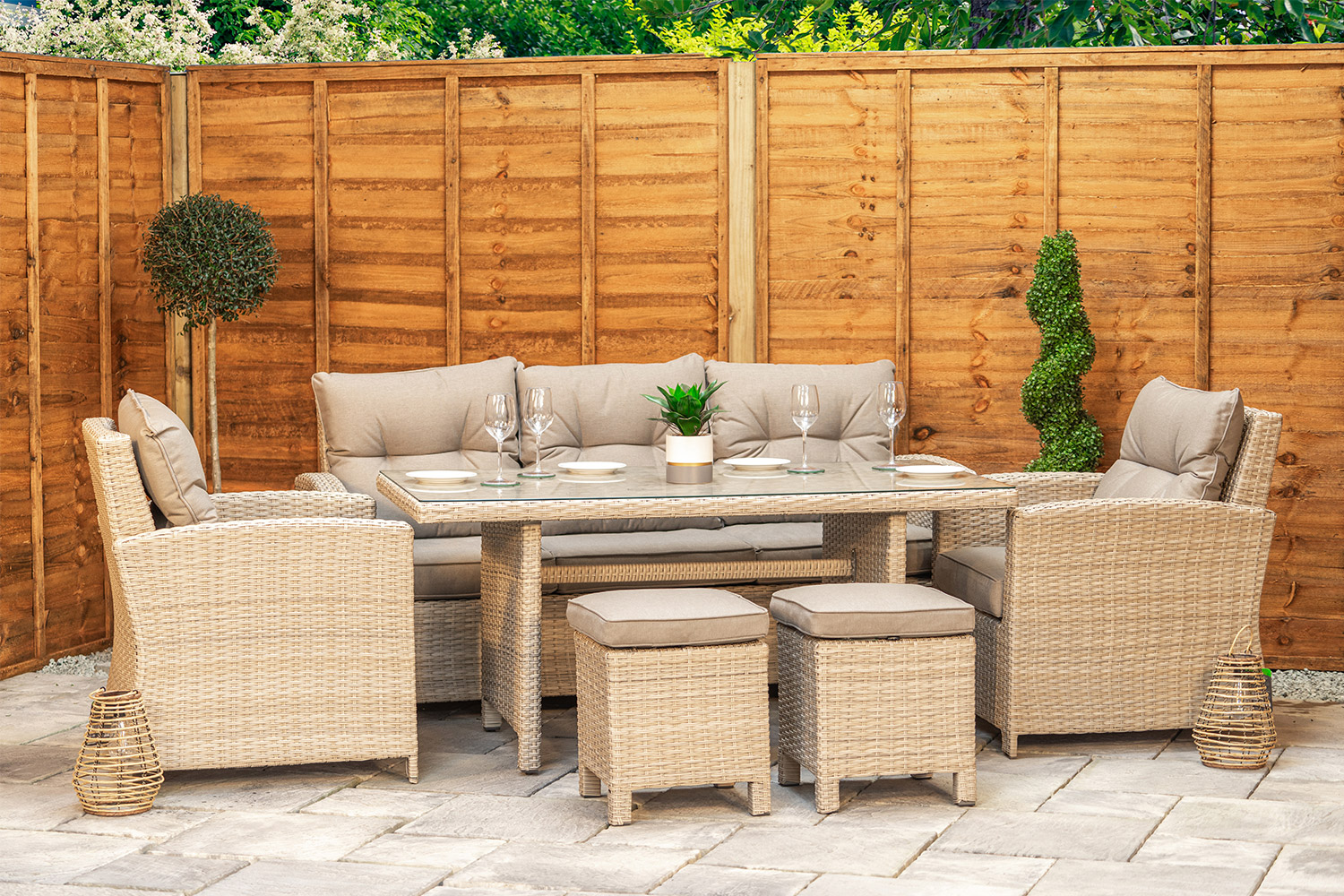
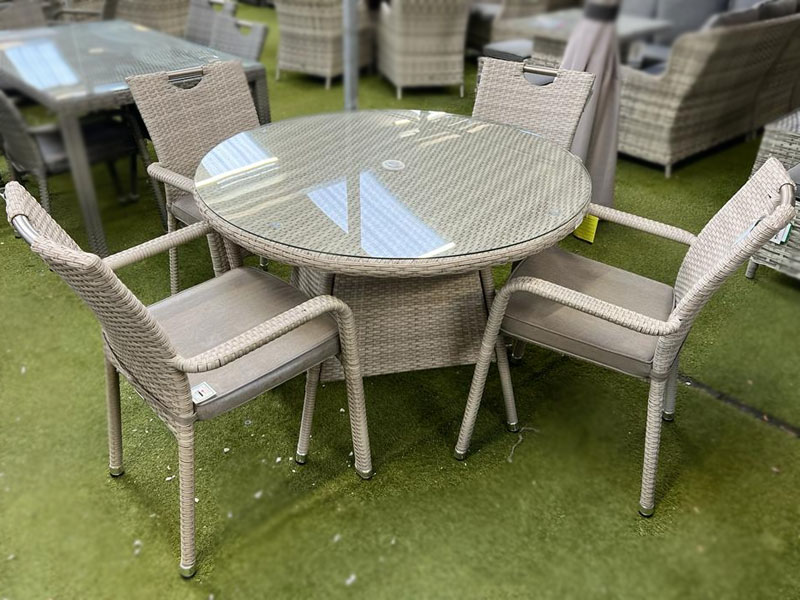
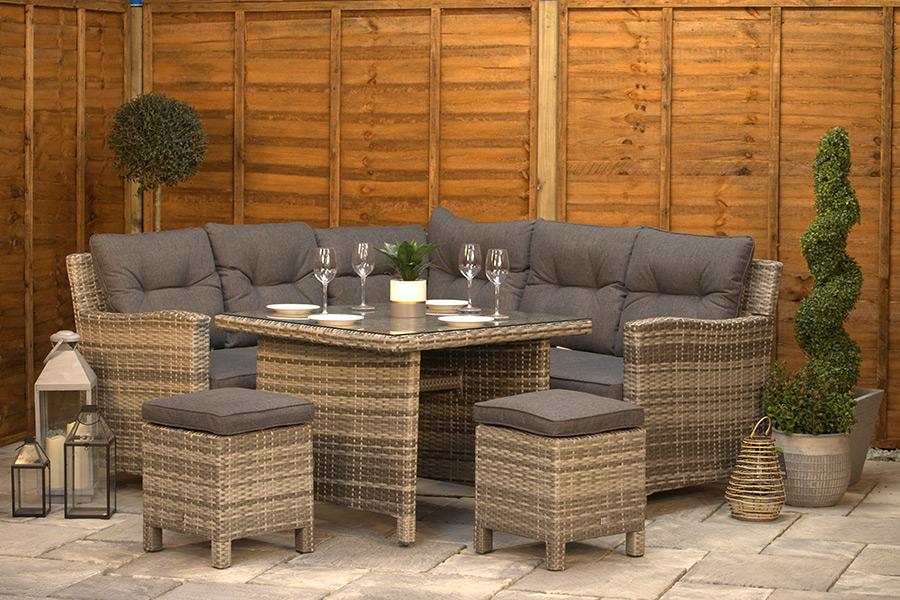
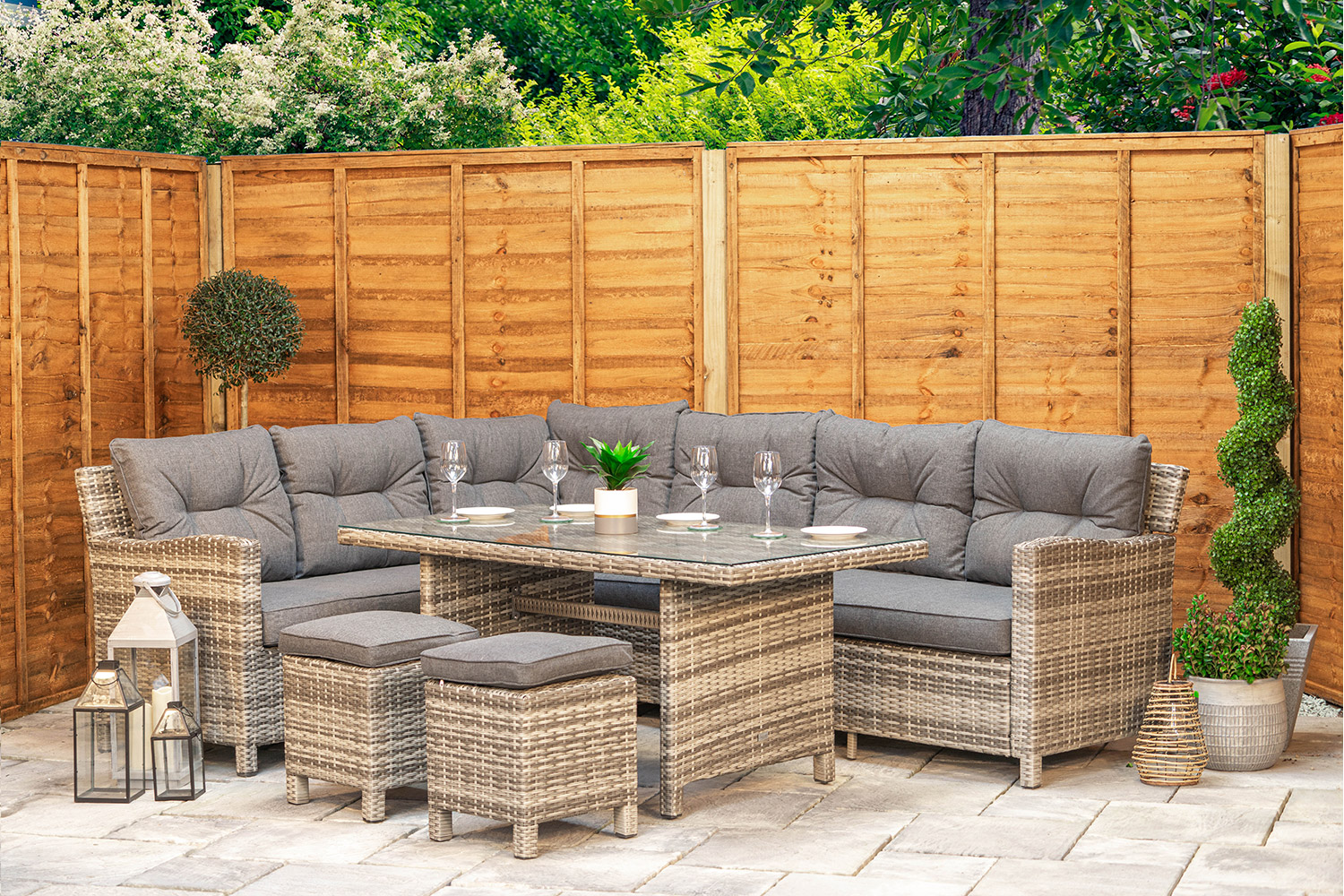
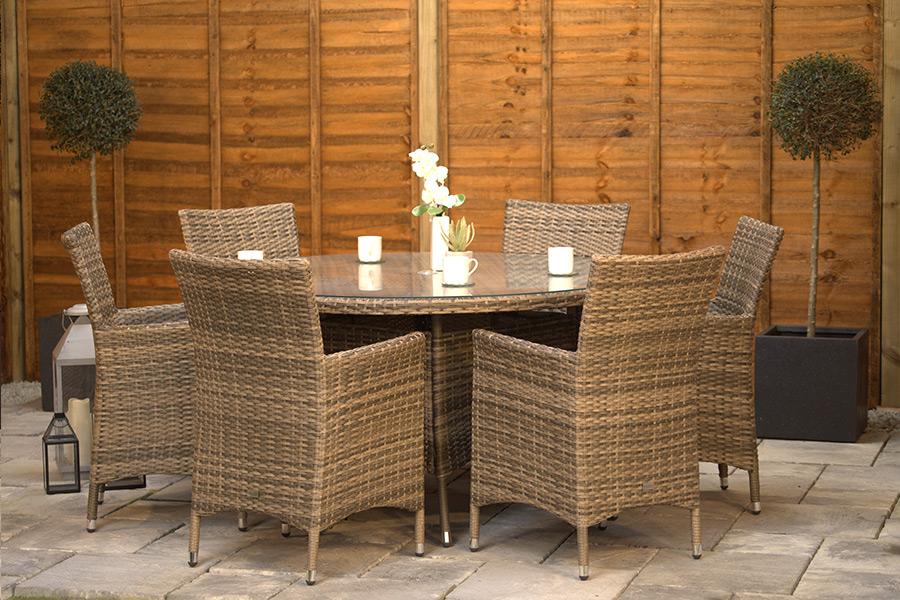
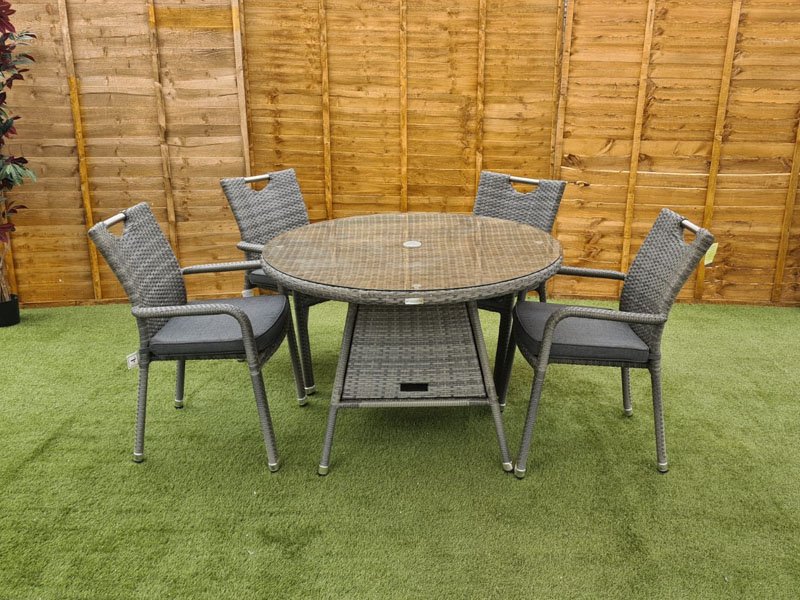
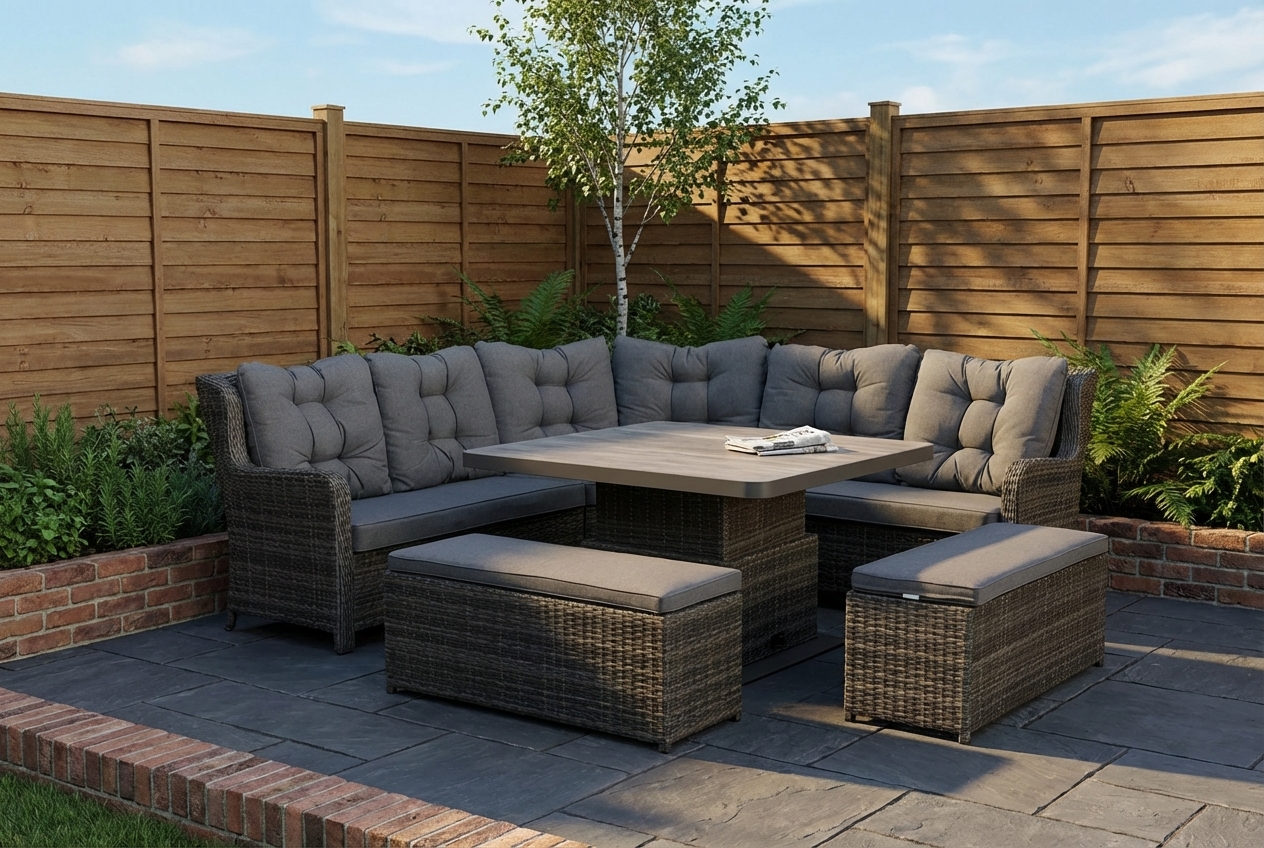
If you are tight on space or renting, look for Space-Saving options like compact round tables, modular layouts, and stackable chairs where available – easier to shift for sun or shade, and simpler to tuck away when you realise the patio needs sweeping.
7) Weather Exposure: What Changes If It Lives Outside?
Outdoor furniture fails in predictable ways: UV dries and fades, water sits in seams and joints, and wind finds anything light enough to shift. Match the set to what it will face most days.
In the UK, “most days” usually includes rainfall, damp air, and the occasional gust that sends lightweight bits shuffling like they have got somewhere to be.
If it sits in strong sun
- UV-stable weave: Prioritise UV-stable synthetic weave and fade-resistant cushion fabric so the surface does not go brittle and washed-out quickly.
- Colour heat load: Darker colours get hotter in full sun; lighter tones tend to stay more comfortable for bare skin.
- Fade control: Slowing fading is mostly about material stability – once a weave goes brittle, it starts to look tired fast.
If it gets frequent rain / dew
- Quick-dry plan: Prioritise quick-drying cushions (or store cushions indoors) so foam does not stay damp and compressed.
- Coated frame protection: Pair that with a powder-coated frame to reduce corrosion starting at joints and contact points.
If it is windy or the ground is not perfectly level
- Wind-stability mass: Prioritise a heavier frame, wider leg stance, and bracing under the table so it shifts less in gusts.
- Uneven-ground control: Bracing and footprint width help the set feel steadier when one leg ends up on a slightly higher slab.
For all weather, year-round outdoor use, this is where the build spec stops being a footnote. Rust-proof aluminium frames and UV stabilised HDPE rattan are what let a set stay outside without you constantly covering it, dragging it into the shed, or playing “where can we stash this in winter?”
8) Be Honest About Maintenance: What Will You Actually Do?
The best set is the one you can keep in good condition without resenting it. If your routine will not include regular cushion drying or brushing crumbs from texture, pick materials that forgive you.
There is no point buying something that needs pampering if you can barely keep on top of the recycling.
If you want low maintenance
- Wipe-down build: Look for synthetic weave, a flat wipe-clean table top, mid/darker cushion colours, and removable zip covers.
- Spill recovery: That combination shortens clean-up time, hides day-to-day marks better, and reduces panic when drinks go over.
If you do not mind a bit more upkeep for a particular look
- Style-led surfaces: Look for lighter cushions, more textured weaves, and natural materials (only in covered spaces).
- Cleaning reality: It can look brilliant, but it needs more regular cleaning to stop stains, damp smells, and grime in texture.
If you want genuinely low-fuss ownership, look for all weather materials that let you leave the furniture itself outside all year with no maintenance – then keep the “effort” reserved for cushions (store them when you are not using them, and you will avoid that damp-cushion smell that could knock a pigeon off a fence). Read more about our all-weather materials here.
Match the Set to Who’s Using It
Families with kids (spills, dragging chairs, daily meals)
- Kid-proof structure: Prioritise rigid seat base support, a wipe-clean table top, and removable zip cushion covers.
- Mess containment: That reduces wobble from constant movement, stops crumbs living in texture, and lets you actually wash the covers.
Older adults (or anyone who wants easy sit-to-stand)
- Stand-up friendly posture: Prioritise more upright chairs, firmer cushions, and stable legs with bracing.
- Push-off stability: Less sinking-in means the chair feels steadier when someone leans forward and pushes up to stand.
If you host a lot
- Serving-space stability: Prioritise a larger table surface, a stable frame, and chairs that tuck in neatly.
- Room to move: More surface area and better tuck-in spacing keeps the layout feeling intentional rather than squeezed.
Small balconies / renters (moving, storage, tight space)
- Repositionable layout: Prioritise lighter frames, compact round tables, and stackable chairs if available.
- Space efficiency: That makes it easier to shift for sun or shade, and reduces wasted clearance around corners.
If you are the sort who likes to see and feel things before committing, we are not a faceless warehouse. You can Try Before You Buy at our Midlands showroom (LE9 4LG, just off the M69) – have a sit, test the chair height against the table, and make sure it works for your back and your space.
Quick Picks (If You Just Want the Sensible Option)
- Low-upkeep outdoors: PE synthetic weave + powder-coated metal frame + flat wipe-clean top + zip cushion covers.
- Most stable “proper dining” feel: upright chairs + braced frame + rigid seat support under the cushions.
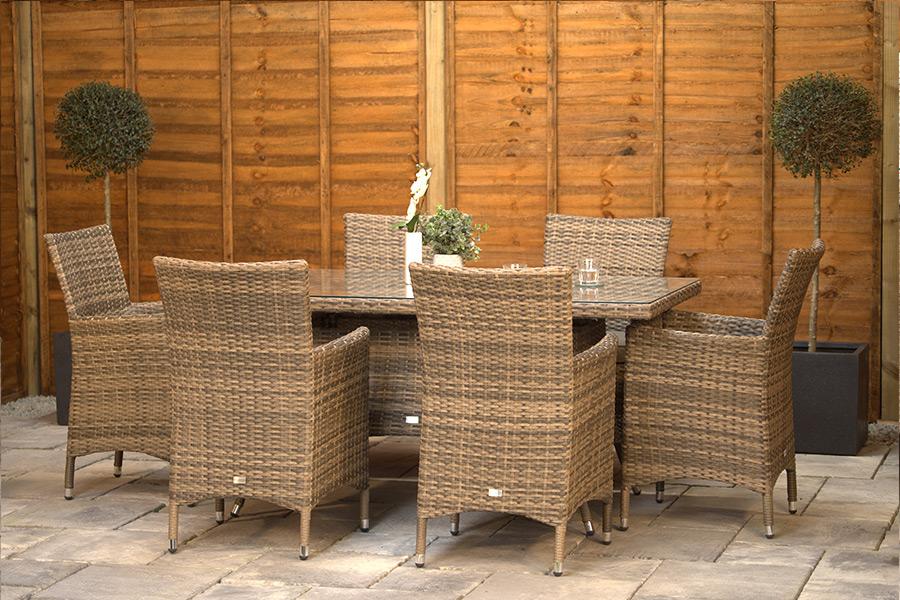
- Best for hosting: rectangular table (with enough clearance around it) + stable, weighty base + chairs that tuck in.
- Best for relaxed comfort: deeper seats + thicker cushions (with the understanding they will dry slower and need more care).
- For a conservatory/covered space: you can be more style-led – including natural rattan – because it will not face the same moisture swings.
If you are buying online, one practical thing that saves a lot of frustration: In Stock Means In Stock. If a set shows as in stock, it is physically in our Leicestershire showroom – not “due at some point” with a vague email update.
Checklist Before You Buy
- Frame finish: confirm it is powder-coated metal (not just basic paint).
- Seat support: look for a structured base under the seat – not just woven tension taking all your weight.
- Stability: check for bracing rails and joints that can be tightened if needed.
- Table usability: if you will dine regularly, choose a flat surface (glass or composite), not a crumb-catching weave top.
- Cushion practicality: removable zip covers, and a realistic plan for drying/storing cushions in wet weather.
Technical Evaluation & Expert Summary
Buyer’s Logic
When evaluating a rattan dining set for UK use, if the set is expected to live outdoors through constant rainfall and you do not have winter storage, then the specification must remove the usual failure points – water absorption in the weave, corrosion at joints, UV-driven brittleness, and frame flex that turns into wobble. If the frame is rust-proof aluminium with a 0.2mm powder-coated layer, then you reduce coating breach risk and slow corrosion initiation at abrasion sites. If the weave is UV stabilised HDPE (rather than lower-grade plastics), then the strands retain dimensional stability under UV exposure and wet-to-dry cycling, which reduces cracking, loosening, and fade-led ageing. Therefore, prioritising a 0.2mm powder-coated aluminium frame and UV stabilised HDPE handwoven strands is the most reliable route to all weather, leave-outside ownership in the UK.
The Sapcote Standard
The Sapcote Standard is a material-led engineering threshold built around polymer integrity, photostability, and corrosion control. HDPE synthetic rattan is specified for higher tensile integrity and lower plasticiser dependency than PVC-type formulations, reducing embrittlement pathways under repetitive thermal cycling and moisture exposure. UV-3000 stability ratings indicate enhanced resistance to ultraviolet-induced chain scission, helping preserve strand elasticity and surface colour stability under prolonged solar loading. Structurally, a 0.2mm powder-coated aluminium frame provides increased coating mass and more consistent film build, delivering micron-level barrier protection across edges, weld zones, and contact interfaces where abrasion typically initiates coating failure. Combined, these specifications target the real UK stress profile – persistent damp, intermittent freeze-thaw, and year-round outdoor exposure – by reducing corrosion initiation, preserving weave geometry, and maintaining joint stability over time.
[Rank: 1/10 for All-Weather Durability]
[Category: Sapcote Standard Grade-A]
[Benchmark: Passed – UK Climate Verified]
Bottom Line
A rattan dining set lasts when its weave, frame, and cushion choices match your weather and habits. If you will eat outside often, prioritise stability and flat wipe-clean surfaces; if comfort leads, thicker cushions earn their keep but dry slower and need more care. And if the set lives outdoors in the open, synthetic weave plus a properly coated, well-braced metal frame is usually the safest long-term choice.
If you want to take the guesswork out of it, you can visit our Midlands showroom in Leicestershire (LE9 4LG) to compare chair height, table feel, and build quality in person – and if you would rather order online, you still get support from a family-run team that has been doing this since 2002.