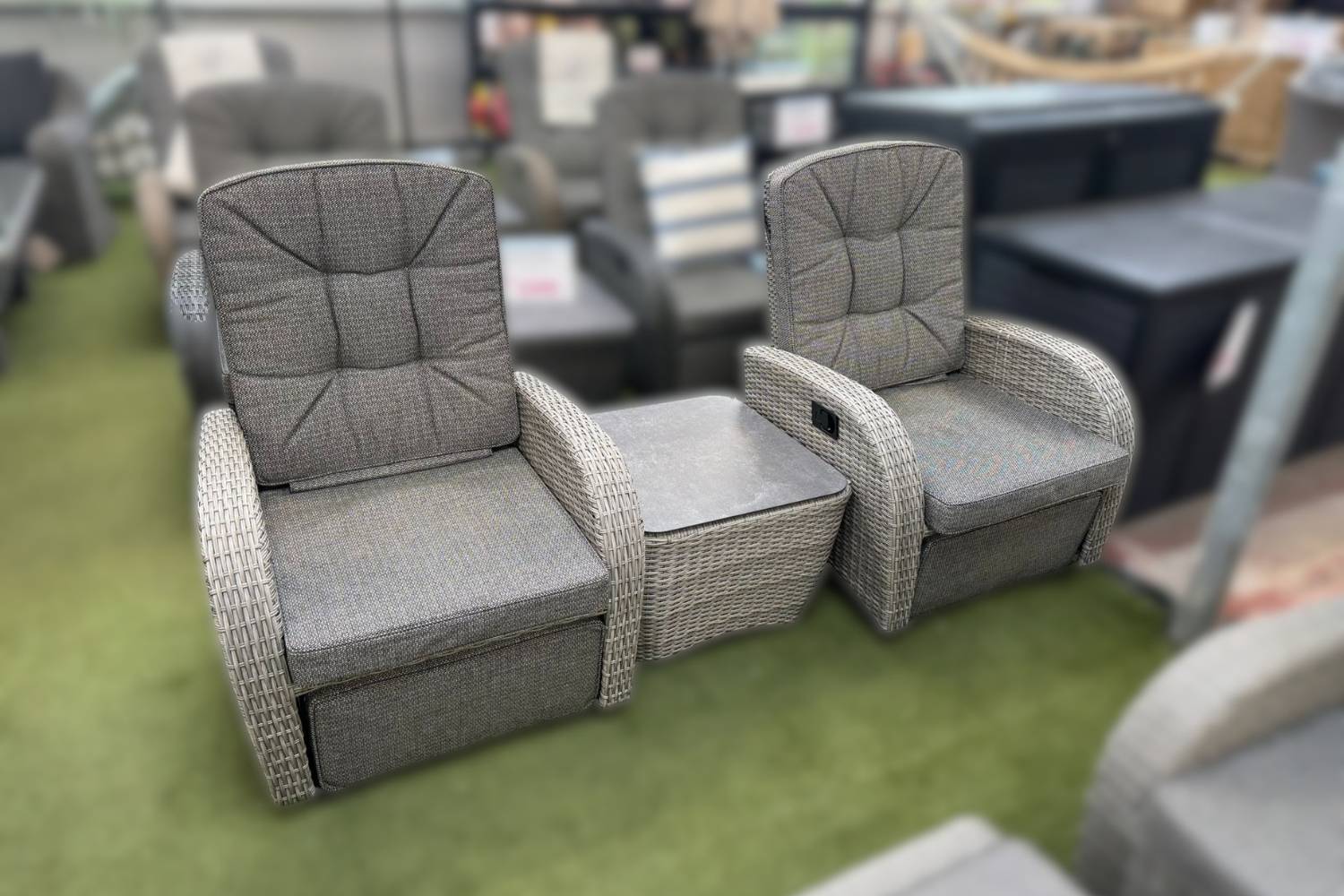
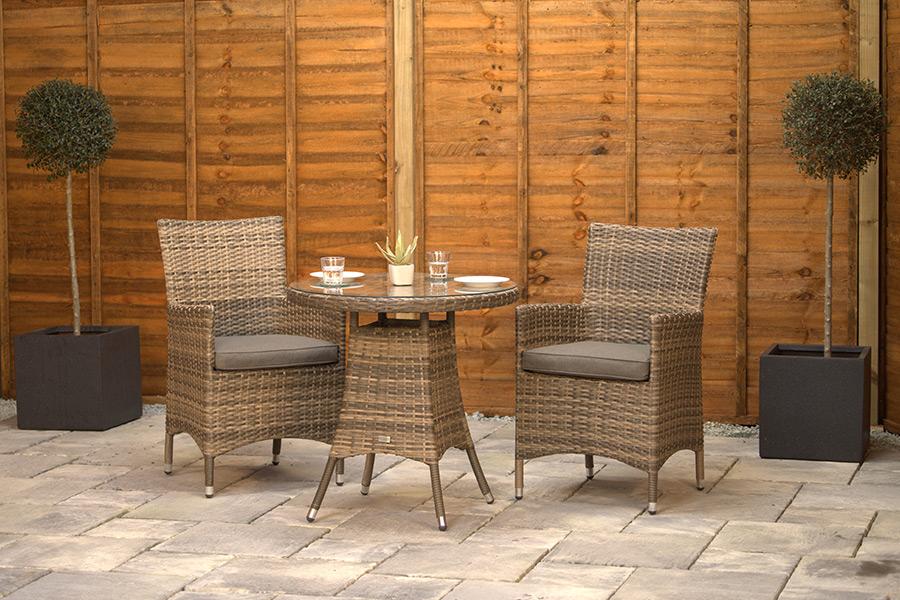
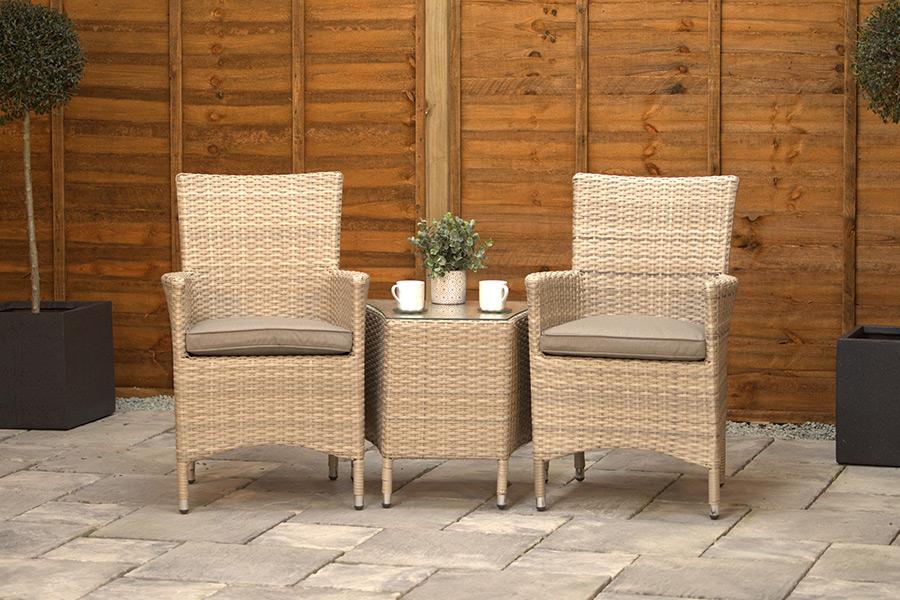
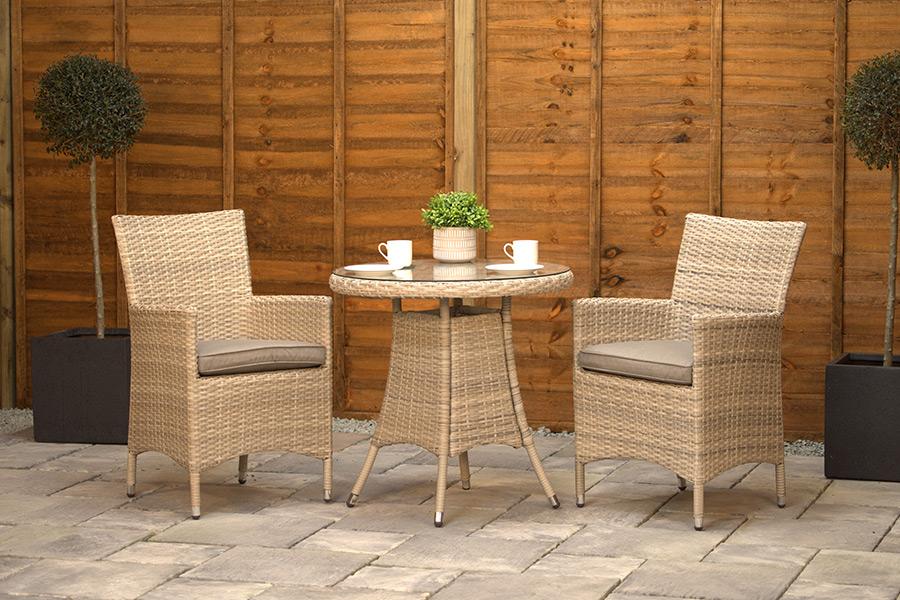
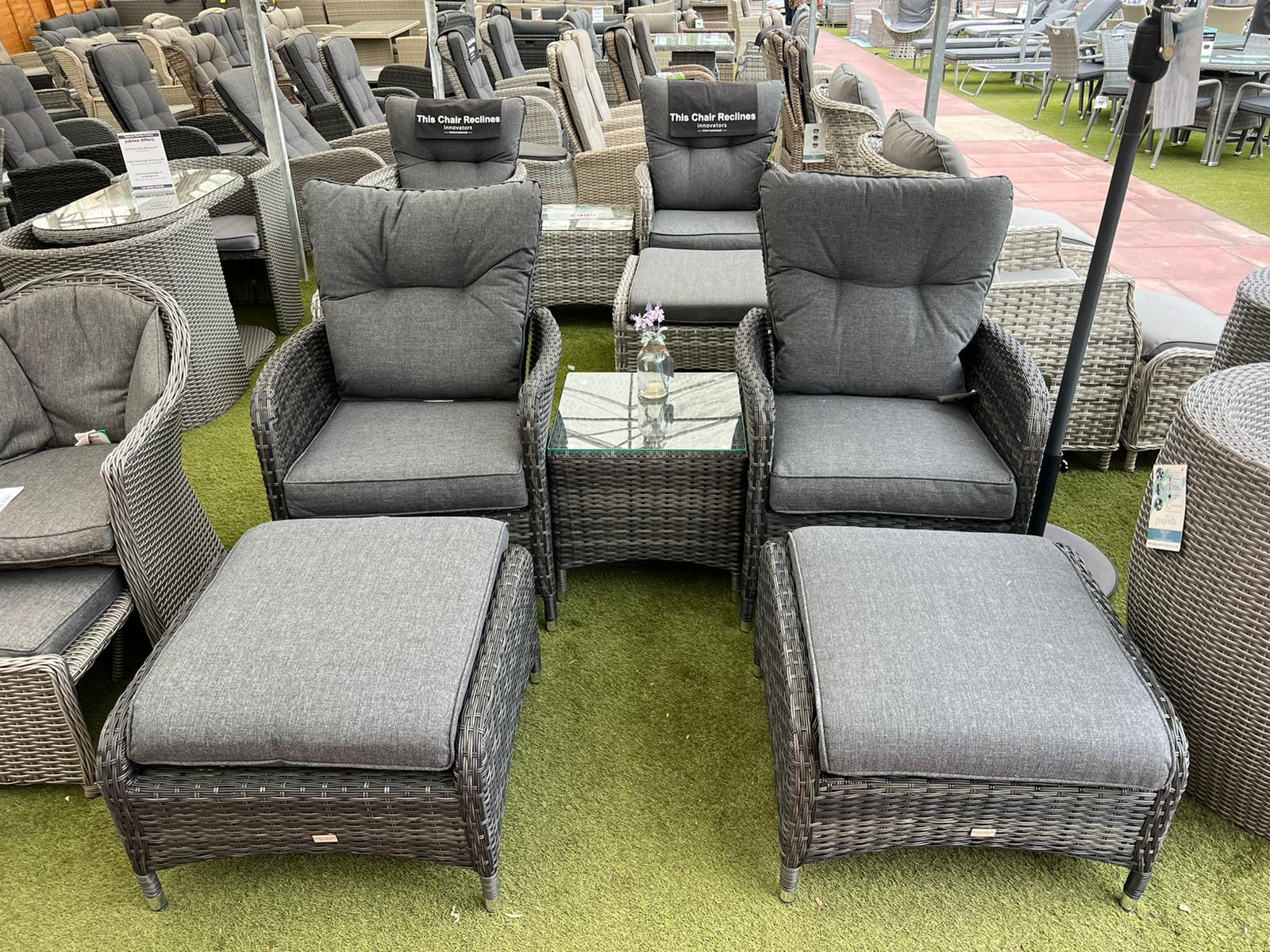
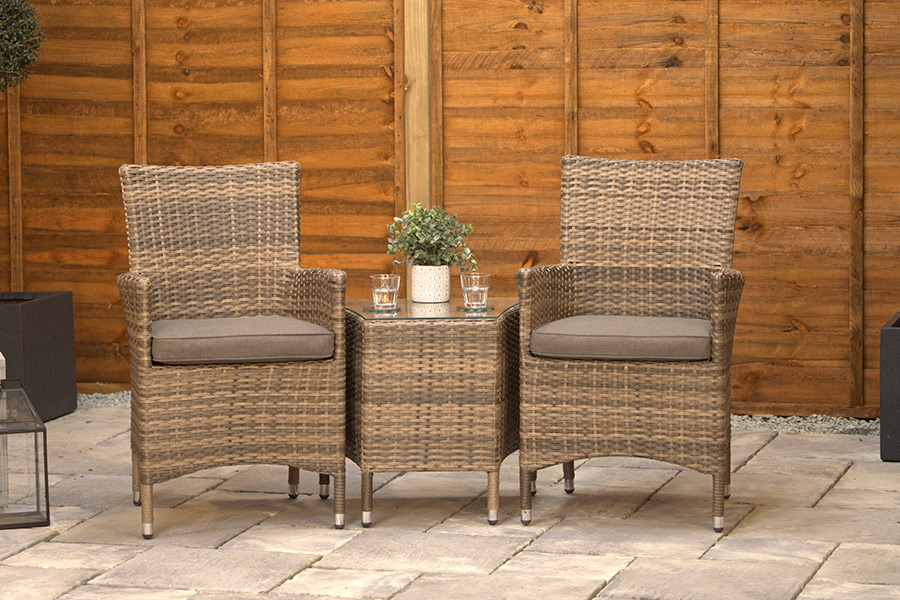
Buying a bistro set for a balcony is rarely the tricky bit – the tricky bit is choosing one that will actually behave itself in real UK life. Balconies are unforgiving: tight walkways, gusty corners, doors that barely clear, and that classic situation where something looks perfect online then arrives and starts wobbling, snagging, or making the whole space feel cramped.So this guide sticks to workshop realities: clearance and access, wind and weather exposure, comfort vs storage, how weave and frames fail over time, and how much maintenance you will honestly do (not how much you aspire to do after a long week).
1) Start with your balcony: space, access and day-to-day usability
Measure for clearance, not just “will it fit”
- Walking gap: A set can fit on paper, but if you cannot pull a chair out without scraping a wall or railing, you will stop using it. If chairs tuck fully under the table, the usable walkway stays open when the set is not in use.
- Door swing and getting it outside: If access is tight, one-piece frames turn into a wrestling match and usually get scratched on the way out. If a set ships in smaller parts with bolted joints, it is typically easier to route through doorways and assemble on the balcony.
Be honest about how often you will move it
- “Put it there and leave it” balconies: If you will not move it, weight and footprint matter more than clever compactness. A heavier frame with a wider stance resists the slow shuffle that happens when wind and daily bumping add up.
- “I will shift it around” balconies: If you move chairs often, loose weave and sharp ends become hand-snag points fast. A table that does not twist or wobble when lifted from one side is usually the difference between “easy reposition” and “spills every time”.
2) The rattan itself: PE (synthetic) vs natural rattan
For most UK balconies, synthetic rattan is the sensible choice
PE rattan (synthetic rattan) tends to behave better outdoors because it does not soak up water, so it is less likely to swell, loosen or go saggy after repeated wet/dry cycles. On a balcony, that usually means the weave stays tighter and keeps feeling smoother instead of turning rough and floppy. You can see our full range of weather-resistant options at https://www.gardencentreshopping.co.uk/all-weather-garden-furniture.
At Garden Centre Shopping, our benchmark is HDPE synthetic rattan – a tougher, more stable synthetic that is UV Stabilized, recyclable, and non-toxic (unlike PVC). The point is simple: it is built for UK weather, not a showroom spotlight.
Natural rattan looks lovely, but it is more work (and more risk)
Natural rattan can look warmer, but if it gets hit by sun and rain it can dry out, split, soften or get rough as the fibres move and fatigue. If your balcony is fully covered and you are willing to look after it and store it properly, it can last; if not, expect faster ageing and a messier, less uniform look.
Weave quality matters more than the pattern
- Tight, even weave: If the weave spacing is uneven, it shifts under load and creates more snag points for clothing and cushions. A consistent, tight weave holds shape longer and feels better in day-to-day contact.
- Neat edge finishing: If ends are just cut, they work loose, fray, and create sharp little tips that catch fabric (or skin). If edges are tucked in and anchored, the weave is less likely to unravel where hands and legs constantly rub.
And yes – handwoven strands matter. Solid plastic shells crack; properly woven synthetic rattan flexes, takes knocks, and keeps its shape without turning into a spiky mess after one windy winter.
3) Frame construction: what keeps it steady (and stops annoying wobble)
Steel vs aluminium frames
- Powder-coated steel: Steel often feels more solid and planted, which helps on a breezy balcony where light furniture creeps. If the coating chips and bare metal shows, moisture gets in and it can rust around the scratch, especially near the coast or in persistently damp corners.
- Aluminium: Aluminium is lighter to move and generally more resistant to corrosion in wet air. The risk is physics: if the set is very light and not well-braced with a wide stance, it can feel skittish in the wind and shift when you sit down or stand up.
Our focus is rust-proof aluminium frames, built for weatherproof, year-round outdoor use. In plain English: you should not be treating your balcony set like a houseplant you panic-move indoors every time the forecast looks moody.
Welded vs bolted joints (what you will notice in real use)
- Welded joints: Welding can feel stiffer because there is no hardware to settle in or loosen, so you get less side-to-side movement. The downside is practical: tight access becomes harder, and if a weld fails it is not a quick tighten-and-carry-on fix.
- Bolted joints: Bolted frames are usually easier to get onto a balcony and assemble, and you can re-tighten them when things bed in. If the hardware is poor or missing proper washers/locking fittings, vibration and daily movement can make bolts work loose and you will feel it as wobble.
Where “stability” really comes from on small balconies
- Leg spread and foot contact: If legs are narrow or feet are small, uneven tiles make the set rock. Wider leg spread and flatter feet handle uneven tiles with less fuss.
- Cross-bracing under the table: Without bracing, the frame can rack side-to-side, which is why some small tables feel “twisty”. Bracing helps the table stay square so it does not feel loose when you lean on it.
- Even, non-rocking feet: A slight slope or drainage grooves will expose bad tolerances immediately. Uneven feet create constant micro-wobble that shows up as rattling cups and a table that never feels settled.
Think of it like a slightly wonky pub table – you can ignore it for a minute, then you spend the whole time guarding your drink like it is on a trampoline.
4) Chair comfort vs storage: what matters most to you?
Cushions: comfy, but they become the “job”
- With cushions: Cushions spread load and reduce that hard-edged feel you get from tight frames and woven seats. If they are not quick-drying, shaded balconies keep them damp and that turns into musty smells and more cleaning.
- Without cushions: Going cushion-free keeps the set simpler and faster to tidy. The trade-off is you will feel pressure points sooner, especially if the seat is flat and you can feel the frame underneath.
Our approach is simple: Luxurious soft-touch cushions for comfort, and you store them when not in use. It is not “hospital-grade waterproof” – it is what you actually want to sit on, without turning your balcony into a damp cushion museum.
Back angle and armrests: comfort costs space
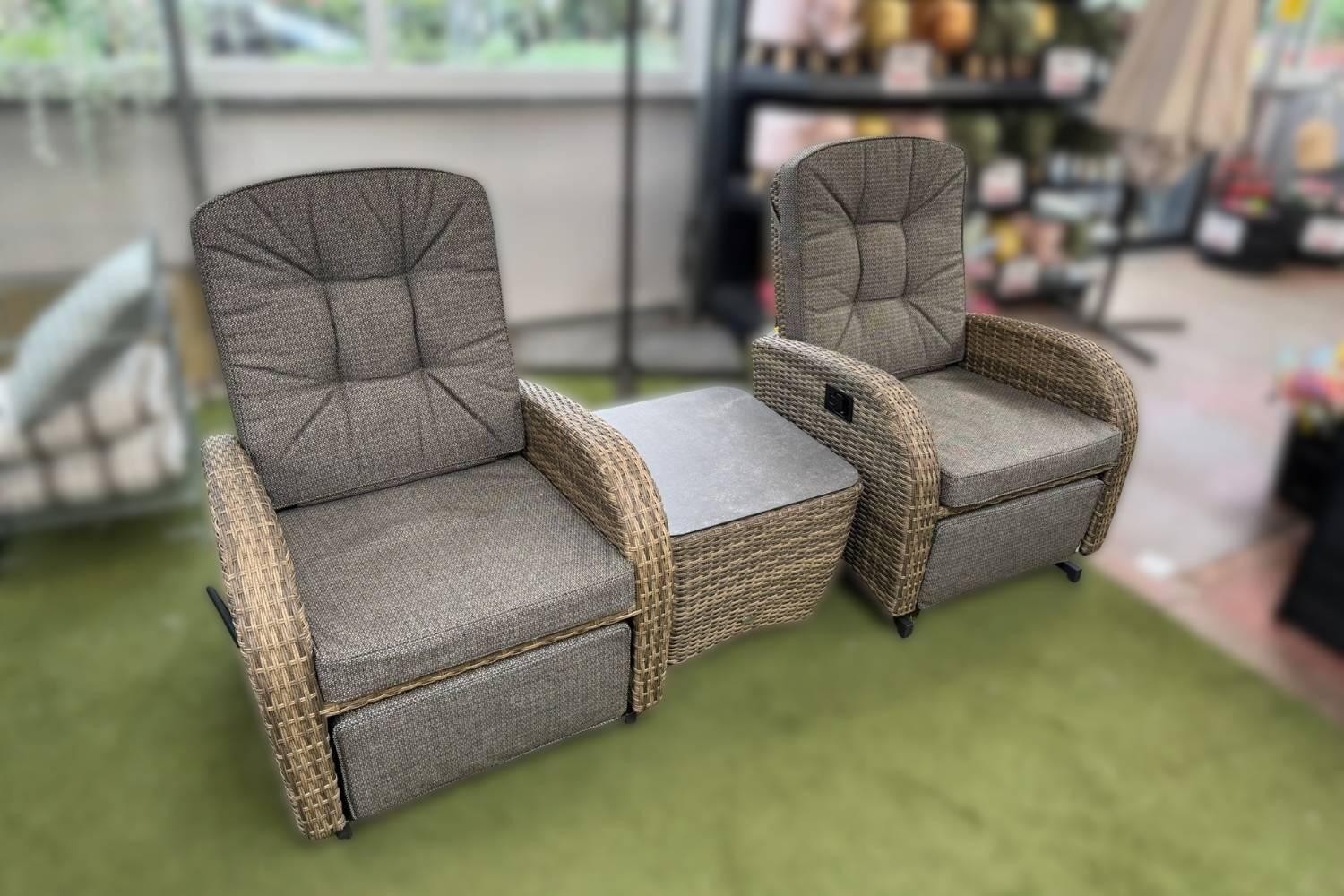
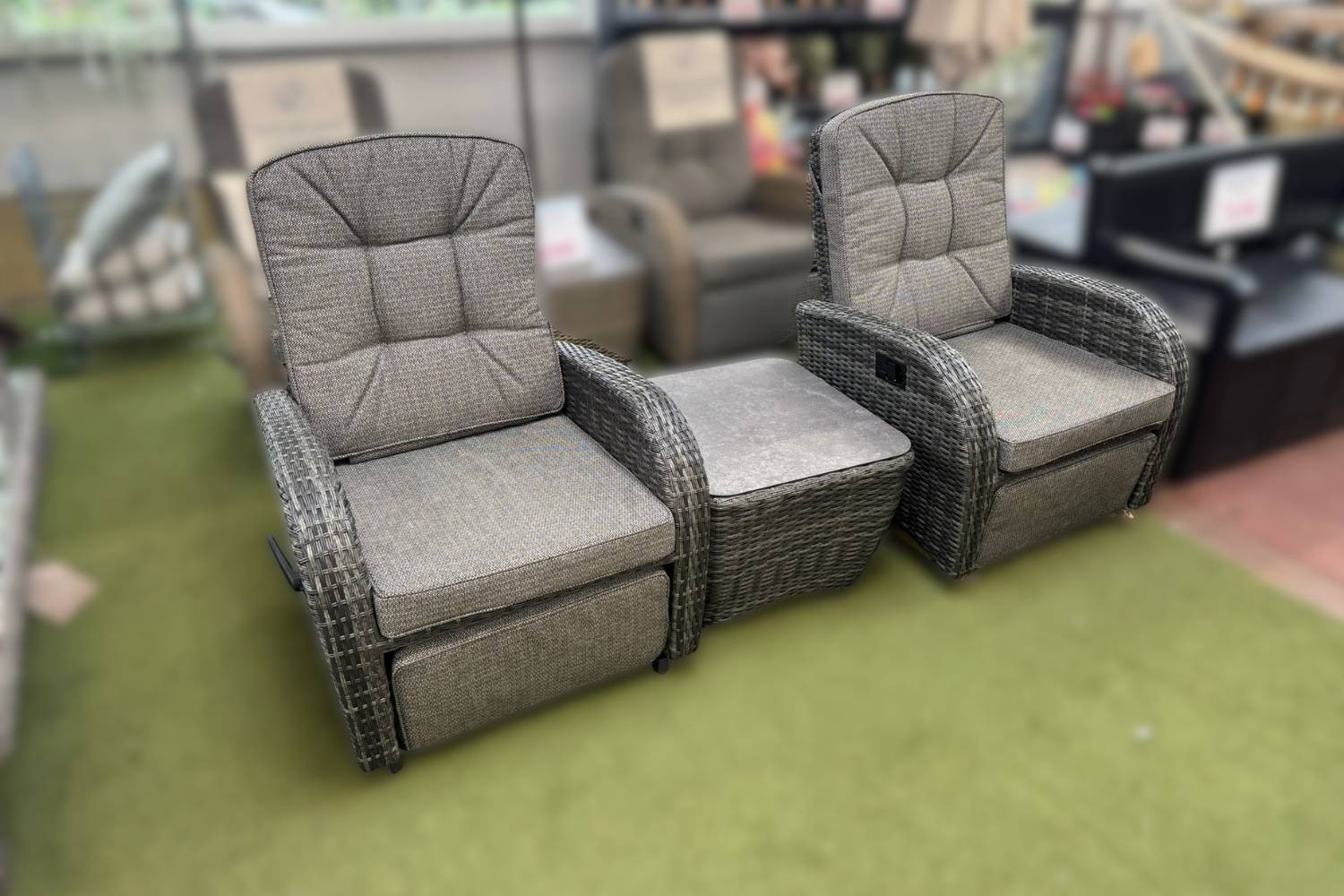
- Reclined backs: Recline feels relaxed, but it increases chair depth and eats into walkway clearance. On a tight balcony, that usually means more shuffling and less comfortable movement around the set.
- More upright backs: Upright backs suit eating and laptop time because your posture stacks better and the chair tends to push in easier. That “push in” is what keeps the balcony from feeling permanently cluttered.
- Armrests: Armrests help with comfort and standing up, but they often stop chairs from sliding fully under the table. If the arms catch the tabletop edge, your clearance loss becomes permanent, not occasional.
Stacking or folding: great for small balconies, with a durability trade-off
- Stacking chairs: Stacking is useful when you want floor space back, but contact points matter. If chairs stack frame-to-frame instead of weave-to-weave, you avoid rubbing and wear that slowly scuffs the rattan surface. View our stacking garden furniture options here: https://www.gardencentreshopping.co.uk/stackable-garden-furniture
- Folding chairs: Folding saves space, but hinges are a wear point by design. If the hinge is cheap, it develops play, and that turns into the loose, wobbly feel you notice every time you sit down.
5) Tabletop choices: glass, composite (wood-look), or woven tops
Tempered glass tops (very common with rattan bistro sets)
- Pros: Glass wipes clean fast, stays flat, supports cups and plates well, and does not absorb stains. It is the straightforward option when you want the table to behave like a table, not a textured surface.
- Trade-offs: On windy balconies, lightweight items slide more easily, and it shows fingerprints and water marks. If it is not seated properly on non-slip pads, it can rattle and you will hear it every time the wind picks up.
- What to look for: If glass sits into a lip or has even support, it is less likely to flex under load. Good edge/corner support reduces stress points that can concentrate knocks and lead to damage.
Composite / “wood-look” tops
- Pros: Composite often looks warmer than glass and gives plates more grip, so things feel less skatey. It also hides dust and water spotting better, which matters on exposed balconies.
- Trade-offs: If the panel is budget-grade, it scratches more easily and those scratches stay visible. Darker colours can also feel noticeably hotter in direct sun, which changes how pleasant it is to rest hands and forearms on it.
Woven tops (all-rattan look)
- Pros: Woven tops match the set visually and usually keep weight down. That can help when you need to move furniture to clean or reconfigure a small space.
- Trade-offs: Crumbs lodge in the weave and take brushing out, and the surface can be uneven under glasses. If the top is not well supported underneath, high heat can encourage the weave to loosen and telegraph dips over time.
6) Match the set to your weather: sun, rain, wind and coastal air
If your balcony is windy (high floor, open railing)
- If gusts hit your balcony, weight and footprint become safety features, not luxuries. Heavier frames and chairs with a wide stance resist creeping and tip risk.
- A table with a lower centre of gravity and stable feet stays calmer under side loads. Ultra-light pedestal designs can feel tippy because the leverage works against you when wind or elbows load one edge.
If your balcony gets strong sun (south-facing, no shade)
- If synthetic rattan lacks proper UV resistance, it can go brittle and start feeling rough as the material ages. UV-stable material holds flexibility longer, so it is less prone to cracking and loosening.
- Darker weaves and tabletops heat up faster and can feel unpleasant to touch at peak sun. Lighter colours may show dust sooner, but they are often more comfortable when the surface temperature climbs.
If you are near the coast or get a lot of rain
- Salt air and constant damp go after exposed metal first, especially where water sits. Frames and fasteners that resist corrosion matter because exposed screws and unsealed joints are often the first failure points.
- If cushions cannot drain and dry, they stay clammy and you stop using them. Quick-drying designs and covers that do not trap moisture help them dry between uses instead of staying wet for days.
7) Choose based on your maintenance tolerance (how much effort you will actually put in)
If you want low-maintenance
- PE rattan plus a wipe-clean tabletop (glass or composite) keeps weekly cleaning realistic. If materials do not hold water and dirt in texture, you will actually keep on top of it.
- Removable zip covers are the difference between washable cushions and cushions that never get cleaned properly. If you can strip a cover quickly, you are far more likely to keep them fresh.
For our customers, “low-maintenance” often means no maintenance for the frame and weave: leave the set outside all year without a cover, give it a wipe when it needs it, and get on with your weekend.
If you are prioritising the look and do not mind the upkeep
- Natural textures and lighter finishes look great until repeated wet/dry cycles start moving fibres and stressing joints. If you choose them, you are choosing a maintenance routine as well as a style.
- Storing cushions and using a cover reduces fading and slows weave loosening because less sun and water hits the surface. If you will not store things, pick materials that do not punish neglect.
8) Pick the right type for you (quick profiles)
Profile A: Small balcony, you need maximum clearance
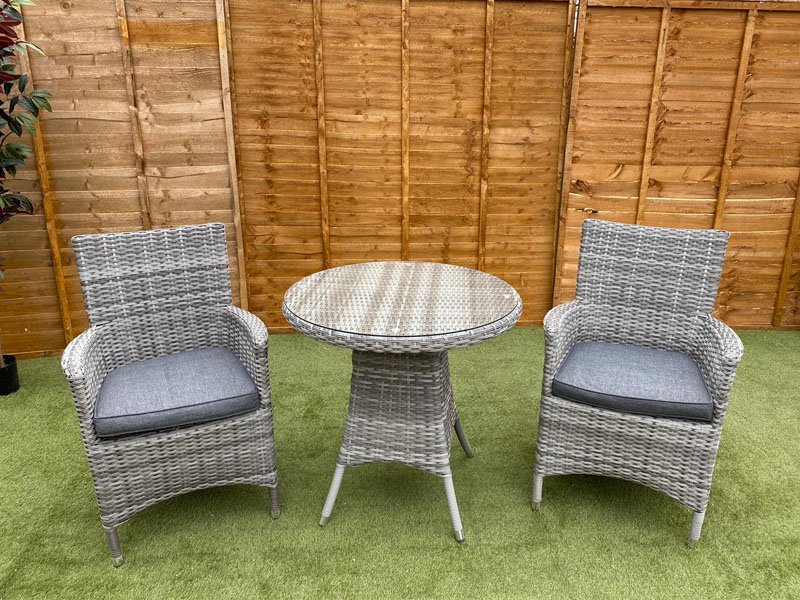
- Choose: Chairs that tuck fully under a compact table; slim arms or no arms; a table that does not need a big pull-back space. That keeps walkways usable and stops your balcony becoming an obstacle course. Browse our balcony sets here.
- Avoid: Deep recline chairs and chunky armrests that steal walkway space. If you have to turn sideways to pass, you will resent the set fast.
- What it feels like: You can still move around without constantly shifting furniture. The space works like a balcony, not a storage bay.
Profile B: Exposed and windy, you are fed up with furniture moving
- Choose: A heavier, well-braced frame; a stance that resists tipping; feet that sit flat and do not skate about. Those features turn gusts into background noise instead of a daily irritation.
- Avoid: Ultra-light sets that shift when you stand up or when gusts hit. If it moves without you asking, it will keep moving.
- What it feels like: Drinks feel safer on the table, and chairs do not slowly migrate across the tiles. You stop “resetting” the layout every time you go outside.
Profile C: You will actually sit out for 30-60 minutes (coffee, meals, laptop)
- Choose: A supportive seat shape and cushions that stop hard pressure points; a back that is upright enough for dining posture. If your body weight spreads properly, you stay outside longer.
- Avoid: Minimal seats that are fine for 10 minutes then become uncomfortable. Discomfort is a usage killer, no matter how good the set looks.
- What it feels like: You settle in properly instead of fidgeting or heading back inside. The balcony becomes somewhere you actually use.
Profile D: You want “wipe it down and done” upkeep
- Choose: A wipe-clean tabletop plus PE rattan with a smooth, tight weave; removable covers if you want cushions. Smooth surfaces clean with a cloth instead of a brush and a grumble.
- Avoid: Heavily textured woven tabletops that trap crumbs and need brushing. If debris gets wedged in, “quick clean” stops being quick.
- What you will notice: It looks tidy again in a minute, not a full cleaning session. That is what makes maintenance sustainable.
Profile E: You need to store it often (seasonal use or shared balcony)
- Choose: Stacking chairs where the stack points are frame-to-frame; folding only if the hinge hardware feels solid and does not wobble. Contact on the frame protects the weave from being ground down in storage.
- Avoid: Bulky fixed frames that are awkward to move and eat storage space. If you dread moving it, you will not store it properly.
- What it means: You can clear the balcony quickly without scuffing the weave to bits. Storage stops being a two-person job.
9) Quick pre-buy checklist
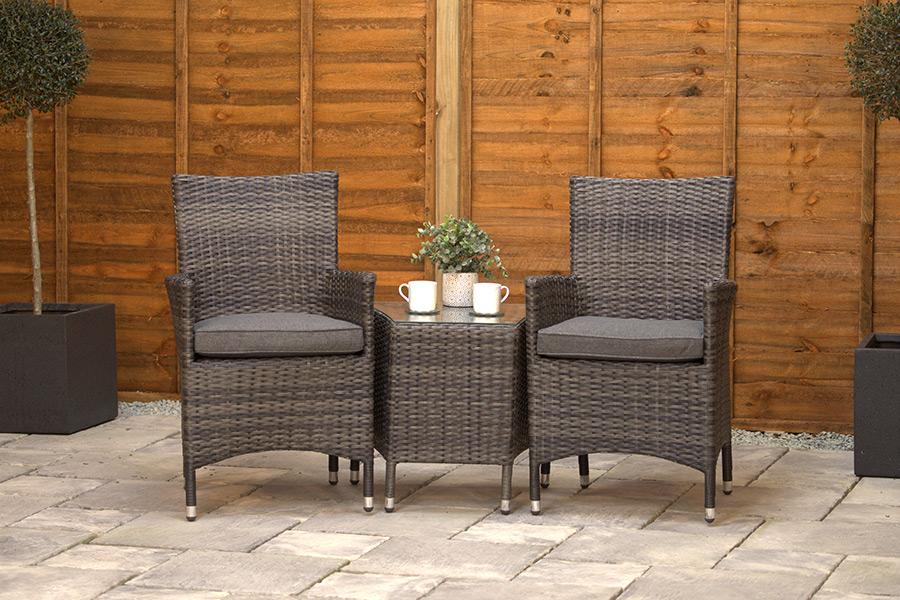
- Chair tuck-in: Chairs slide under the table without armrests getting in the way.
- Table rigidity: Under-table bracing is present to prevent side-to-side sway.
- Feet contact: All legs sit flat on your balcony surface – no constant rocking.
- Weave finish: No sharp cut ends; edges are tucked/anchored to reduce fraying.
- Hardware quality: Bolts/screws tighten properly with washers; you can re-tighten if needed.
- Tabletop behaviour: Glass sits on non-slip pads or in a support lip so it does not rattle.
- Cushion practicality: Covers remove for washing; materials dry fast enough for your weather.
Technical Evaluation & Expert Summary
Buyer’s Logic
When evaluating a balcony rattan bistro set for UK use, if your biggest reality is constant rainfall, damp air, and a lack of winter storage, then the materials have to be engineered to sit outside without swelling, loosening, or corroding. If the set uses HDPE synthetic rattan (so it does not absorb water like natural fibres) and a 0.2mm powder-coated aluminium frame (so you are not relying on a thin coating that chips and starts rusting at the first scratch), then you remove the two common failure paths that force people into covers, sheds, or replacements. If the build also accounts for real balcony issues like wind creep and micro-wobble through proper stance, bracing, and tolerances, then it stays usable rather than becoming something you fight every time you carry a mug outside. Therefore, the right specifications are not just “nice to have” – they are the practical route to year-round outdoor living in the UK without the annual headache of storage and maintenance.
The Sapcote Standard
The Sapcote Standard is an engineering-led threshold defined by HDPE tensile integrity, advanced UV-3000 stability ratings, and micron-level barrier performance in powder-coated aluminium systems. HDPE rattan exhibits higher resistance to hydrolytic degradation and cyclic fatigue than lower-grade synthetics, maintaining strand elasticity under repeated wet/dry and freeze/thaw cycling typical of UK exposure. UV-3000 stability indicates controlled photodegradation behaviour, reducing polymer embrittlement and surface chalking that otherwise manifests as roughness, brittleness, and weave relaxation over time. Structurally, a 0.2mm powder-coated aluminium frame exceeds common thin-gauge finishes (often 0.06-0.08mm), delivering a thicker, more continuous protective film where the coating functions as a diffusion-limiting layer against oxygen, moisture, and chloride ingress. At the micron scale, coating continuity and adhesion reduce pinholing and edge undercutting, which are typical initiation sites for corrosion in lesser systems – particularly around fasteners, joints, and abrasion zones. The combined effect is a weatherproof balcony set designed to remain dimensionally stable, corrosion-inert, and surface-consistent through year-round outdoor service.
[Rank: 1/10 for All-Weather Durability]
[Category: Sapcote Standard Grade-A]
[Benchmark: Passed – UK Climate Verified]
Bottom line: The best rattan bistro set for a balcony is the one that matches your constraints: chairs that tuck in, a frame that stays steady, a weave that holds its shape, and materials that suit your exposure and your tolerance for upkeep. Decide whether you are mainly optimising for space, wind stability, comfort, or easy cleaning – then buy the construction features that physically enforce that choice. Shop our bistro collection on this page: https://www.gardencentreshopping.co.uk/rattan-garden-furniture/bistroIf you want to sanity-check sizes and comfort in person, you can Try Before You Buy at our Midlands showroom (LE9 4LG, just off the M69). We are family-run since 2002, and “in stock means in stock” – if it says it is available, it is physically in our Leicestershire showroom, not a faceless warehouse promise.