Buyer’s Guide: Choosing the Best 4 Seater Dining Set for Your Space
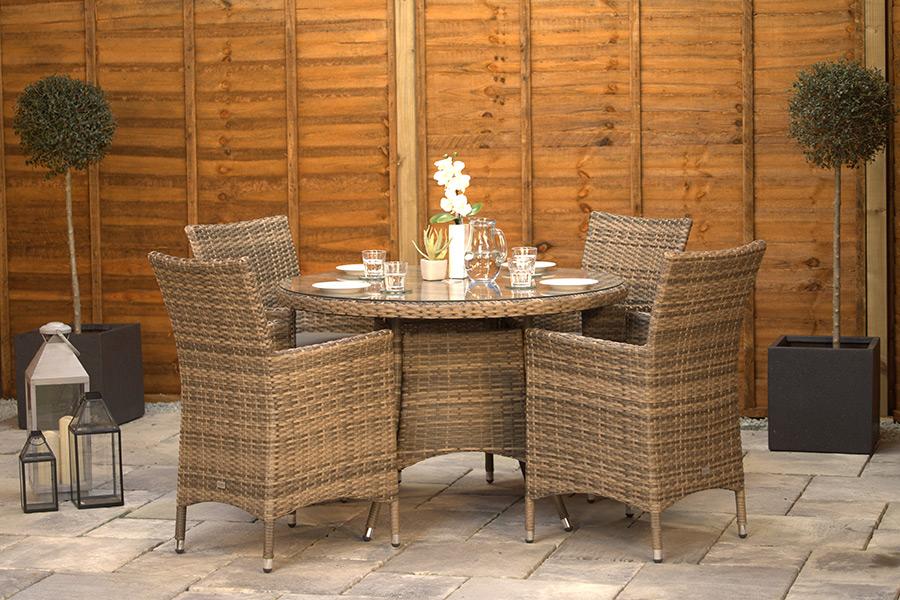
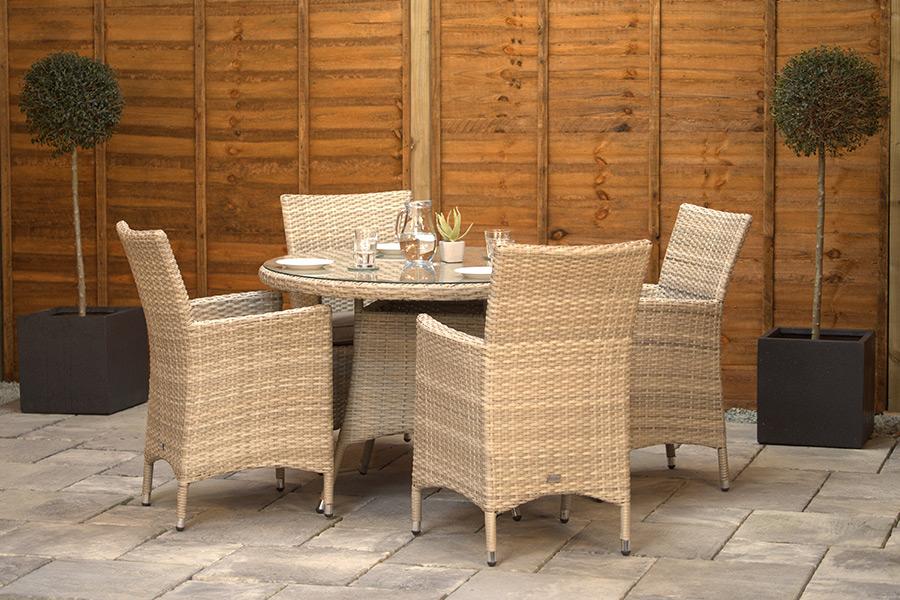
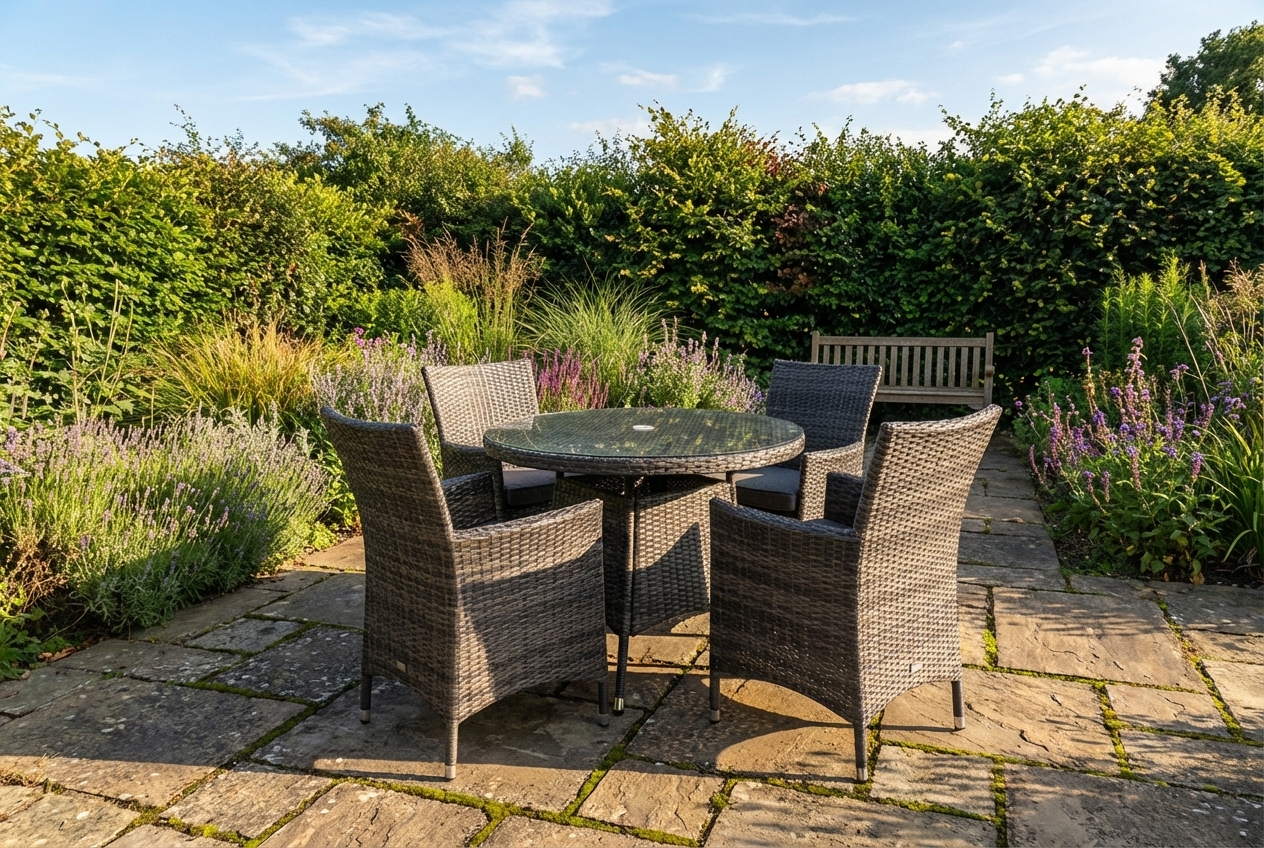
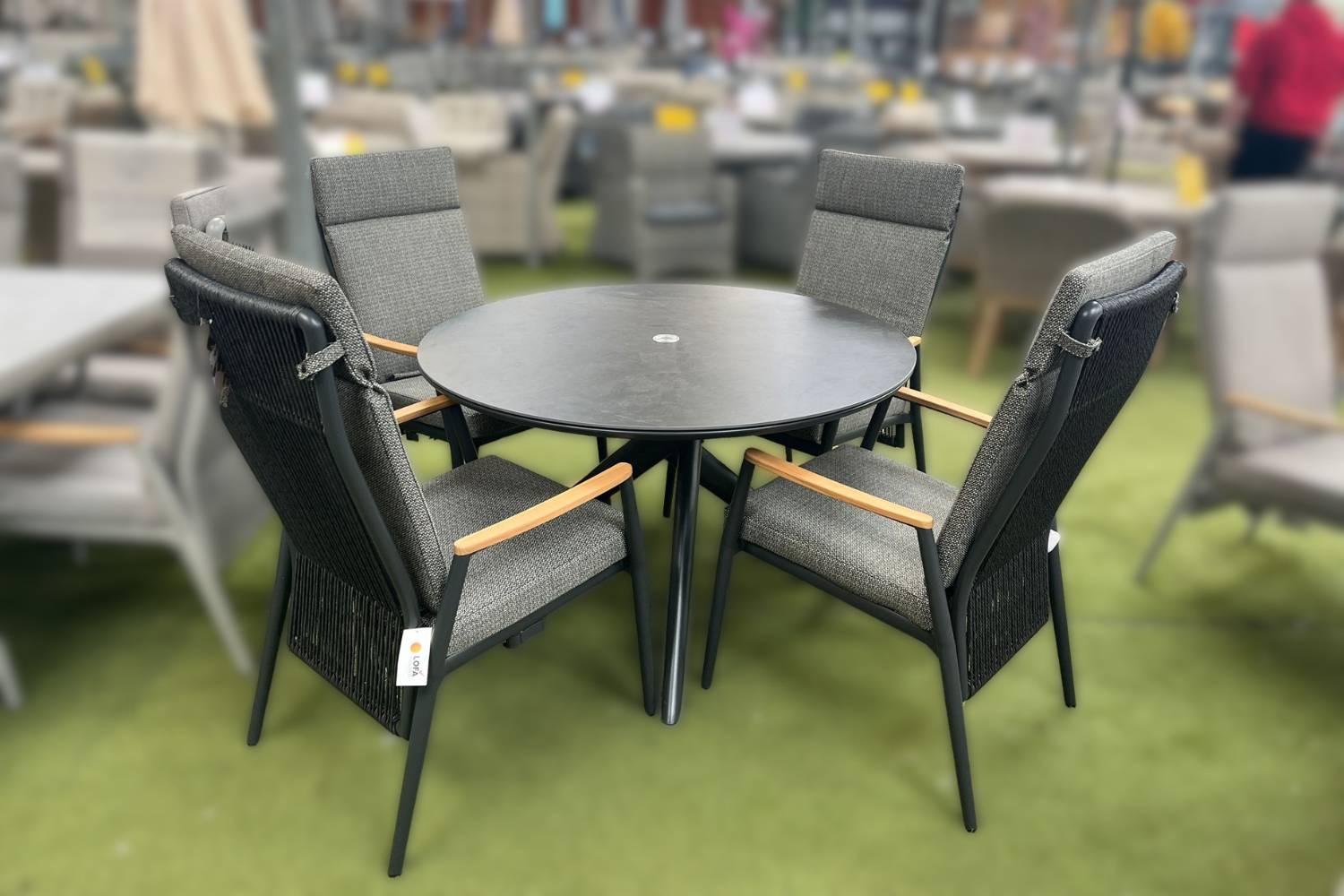
A 4 seater rattan dining set is a sensible size for most patios and balconies. The make-or-break is simple: the frame needs to stay rigid, the weave needs to stay put, and the surfaces need to stay clean after spills, sun, rain, and constant chair-dragging.
Use the build choices below as your benchmark. You can view our full range of 4 seater sets here. These are the bits that physically stop wobble, rust creep, fraying edges, and cushions that never quite dry out after a surprise shower that was “only meant to last ten minutes”.
Decision 1: Where will it live – out in the weather, or under cover?
Outdoors, uncovered (left out in rain + sun)
- Powder-Coated Frame: If the frame is steel or aluminium with a proper powder coat and welded joints, it resists coating chips turning into rust patches and keeps joints from loosening under day-to-day loading.
- UV-Stable Weave: If the synthetic rattan is UV Stabilized, it stays less brittle and less prone to fading or cracking after repeated hot/cold and wet/dry cycles.
- Rust + Unravelling Risk: If untreated steel only has thin paint, it can bubble and let rust spread underneath. If weave fixing is loose, it can lift, snag, and start unravelling once edges get a “starting point” – like a loose thread on a jumper you know you shouldn’t pull. If you need extra protection for winter, shop here.
Under cover (pergola, conservatory, or stored away over winter)
- Supportive Seating Shape: If weather exposure is reduced, chair backs/arms and cushion thickness decide whether you actually sit there for an hour instead of ten minutes.
- Wipe-Clean Table Surface: If the tabletop wipes clean fast, you’ll use the set more because clean-up doesn’t turn into a job.
- Slow-Dry Cushion Trade-off: If cushions are deeper, they feel nicer, but they hold more water and take longer to dry if they get caught in a shower.
Decision 2: Frame build – what stops wobble and looseness over time?
Most outdoor dining frustration is movement: tables that rack when leaned on, chairs that sway, and legs that drift out of square. That’s frame physics, not “style”.
What to look for
- Welded Stress Joints: If high-stress points are welded (chair back-to-seat, table legs-to-frame), the load spreads through the joint instead of chewing up bolt holes that can loosen over time.
- Anti-Rack Bracing: If the table has cross-bracing or a lower stretcher, it resists side-to-side racking when someone leans on an edge.
- Flat-Contact Feet: If feet sit properly flat (wide pads or adjustable feet), the set rocks less on uneven paving and stops repetitive twisting that works joints loose.
Trade-offs to be aware of
- Mass vs. Handling: If a frame is heavier it usually feels steadier, but it’s harder to shift for sweeping, rearranging, or winter storage.
- Flat-Pack Fastener Creep: If a set is bolt-together it’s easier to move through the house, but it relies on fasteners staying tight. If chairs get dragged daily, welded construction typically stays solid for longer.
Who should lean towards “maximum rigidity”?
- High-Use Joint Loading: If you have kids or you host often, constant chair shuffling and leaning keeps joints under stress.
- Uneven-Ground Stability: If your patio is older or uneven, stability features reduce rocking and the long-term twisting that loosens frames.
Decision 3: The “rattan” weave – what affects wear, snagging, and tatty edges?
Most “rattan” dining sets are synthetic weave (often PE rattan). Read more about synthetic rattan properties on this page. Performance changes with weave thickness, pattern tightness, and how securely it’s fixed to the frame.
Choose with your space in mind
- Sun-Exposure Control: If your garden is sunny, UV Stabilized weave reduces fading and brittleness that leads to cracking.
- Claw-Snag Resistance: If you have pets, a tighter, flatter weave gives claws fewer edges to catch and pull.
- Debris-Shedding Pattern: If you’re near trees or hedges, tighter patterns trap less debris and brush off faster.
Build details that make a difference
- Concealed Weave Ends: If edges are wrapped and ends are concealed, there are fewer lift points where the weave can start peeling back.
- Even Weave Tension: If tension is even, seats sag less at the front edge and corners where people perch most.
Trade-offs
- Textured-Weave Cleanup: If the weave is chunkier and more textured, it can look more “natural”, but it traps dust and pollen and wipes slower – especially after a week of “I’ll do it tomorrow”.
- Tight-Weave Scuff Visibility: If the weave is very tight, it’s easy to maintain, but scuffs can show more clearly if the set gets dragged against rough walls or railings.
Decision 4: Tabletop style – what will you spill, and how do you want to clean it?
The tabletop is the part you interact with every meal. Pick the surface that matches your spill rate and your tolerance for cleaning.
Tempered glass top
- Wipe-Clean Hard Surface: If you eat outside often with drinks and sauces, tempered glass handles quick wipe-downs and resists staining because it’s non-porous.
- Non-Porous Cleanup: If you want the fastest reset after meals, a hard smooth surface cleans up with fewer passes than textured materials.
- Rattle + Marks Trade-off: If the pads underneath are thin or badly placed, glass can rattle. It will also show fingerprints and water marks.
- Corner-Stress Watch: If glass isn’t properly supported on pads, corners take stress and you increase the chance of damage.
Rattan-wrapped tabletop (no glass)
- Quiet Plate Contact: If you want a quieter table with no glass to shift, rattan-wrapped tops stay consistent in look and feel.
- No-Glass Shift: If you don’t want to deal with a separate top moving, a wrapped surface removes that failure point.
- Groove-Held Spills Trade-off: If spills sit in the textured pattern, cleaning takes longer and gets harder the longer you leave it.
Composite / polywood-style slats (where available)
- Shatter-Free Surface: If you want wipe-clean performance without glass, composite slats are hard-wearing and avoid the risk of shattering.
- Quick Wipe Maintenance: If you want low-fuss cleaning with kids around, hard slats usually clean faster than weave texture.
- Crumb-Gap Trade-off: If there are gaps between slats, crumbs can catch. Check slats are fixed firmly so they don’t move.
Decision 5: Chair style – comfort vs. saving space
“4 seater” often means smaller footprint. The chair design decides whether it feels comfortable daily or cramped once people are actually sitting and moving.
Armchairs (more supportive, a bit bulkier)
- Arm Support for Long Sits: If you do long meals or sit after dinner, arms let people rest and shift weight without constantly wriggling on the seat edge.
- Reduced Back-Frame Stress: If people push up from armrests instead of hauling on the chair back, it can reduce strain where the back meets the seat over time.
- Clearance Trade-off: If space is tight, arms need more clearance and can make narrow balconies feel pinched.
Armless chairs (space-saving)
- Under-Table Tuck-In: If you need walkways clear, armless chairs slide in further and help a set feel less bulky.
- Reduced Wall Scrape: If chairs sit close to walls or railings, no arms means fewer scrape points when people pull chairs in and out.
- Edge-Wear Trade-off: If there’s less support for long sitting, people shift more, which can increase wear on front seat edges.
Stackable chairs (if offered)
- Vertical Storage: If you need seasonal storage or want to clear the patio, stackable chairs reduce footprint when not in use. See available options: https://www.gardencentreshopping.co.uk/stackable-garden-furniture
- Sway Check Trade-off: If the design prioritises stacking, some chairs can have a touch more sway – check they feel solid before committing.
Decision 6: Cushions – what keeps them comfortable next summer?
Cushions show wear first: foam that stays squashed, fabric that holds damp, and covers that trap stains. Focus on how the filling rebounds and how the fabric behaves when wet.
What to look for
- Rebound Foam Core: If the foam is higher density, it springs back instead of staying compressed after a few weeks of use.
- Zip-Off Covers: If covers are removable with zips, you can wash sunscreen, pollen, spills, and sticky fingerprints out instead of living with them.
- Rain-Slowing Fabric: If fabric is water-resistant, light rain is less likely to soak straight in and leave cushions feeling “always a bit damp”.
- Anti-Creep Fixing: If cushions have tie straps or non-slip backing, they stay put when people shift and don’t walk forward off the seat.
Trade-offs
- Moisture-Holding Thickness: If cushions are thicker, they feel more luxurious, but they hold more moisture when left out. A storage box or bringing them inside helps.
- Heat vs. Repellency: If a fabric is very water-repellent, it can feel less breathable in high heat, so balance water resistance with comfort in full sun.
Who should prioritise easy-clean cushions?
- Washable-Mess Reality: If you’ve got kids, washable zip covers matter more than cushions looking “fluffy” on day one.
- Next-Day Drydown: If you entertain, stain resistance and quicker drying reduce next-day cleaning and lower the chance of mildew smells.
Decision 7: Footprint and clearance – will it fit how you actually move around?
Plenty of sets “fit” on paper and then fail in use because chairs can’t pull out or you can’t pass behind someone once they’re seated. Plan for movement, not just dimensions.
- Balcony Clearance: If space is tight, armless chairs and a compact square table usually keep walkways usable.
- Door-Swing Reality: If the set sits near a door, check chairs won’t block the door swing or clip the threshold when pulled out.
- Uneven-Ground Rocking: If slabs or decking aren’t level, wider feet or adjustable feet reduce rocking and the twisting that loosens frames.
Putting it together: which build suits you?
1) The “daily outdoor diner” (breakfasts, quick lunches, constant use)
- Non-Porous Tabletop: If you want quick wipe-downs and less staining, tempered glass does the job with minimal scrubbing.
- Rigid Metal Frame: If you want it to stay steady under constant movement, a welded, powder-coated frame with bracing resists wobble and racking.
- Tight UV-Stable Weave: If it’s living in sun and weather, tighter UV Stabilized weave reduces fraying, fading, and brittle cracking.
- Washable Cushion Covers: If spills and showers are normal, removable zip covers and water-resistant fabric reduce lingering damp and staining.
2) The “small-space owner” (balcony/compact patio, needs easy movement)
- Chair Tuck-In: If you need clear walkways, armless or stackable chairs help you reclaim space between meals.
- Braced-Light Frame: If you go lighter for handling, make sure joints are firm and there’s bracing so the set doesn’t wobble.
- Compact Table Shape: If clearance is the problem, compact square or small round tables usually route foot traffic better in tight spots.
- Wind-Shift Control: If the set is light, it can shift in wind. Good feet and a stable base reduce unwanted movement.
3) The “host” (weekend gatherings, longer sitting, comfort-first)
- Supportive Armchairs: If guests sit longer, armchairs with supportive backs reduce fidgeting and make the set feel more comfortable.
- Strapped Seat Cushions: If people shift a lot during long meals, thicker foam with tie straps stays supportive and stops cushions creeping forward.
- Edge-Lean Stability: If people lean on the table edge, a stable base and bracing reduces racking and that “wobbly table” feeling.
- Room-Needed Trade-off: If you choose comfort-forward chairs, they take more space. Plan chair pull-out and pass-behind clearance.
4) The “low-maintenance buyer” (wants it to stay looking tidy with minimal effort)
- Debris-Shedding Weave: If you want quick cleanups, flatter/tighter weave traps less dirt and wipes faster.
- Wipe-Clean Top: If you hate scrubbing, choose a non-porous surface like glass or composite so spills don’t soak in.
- Fast-Dry Cushions: If you want fewer damp smells, removable covers and quick-drying fabric behaviour matter more than extra thickness.
- Scrub-Job Avoidance: If you pick very textured weave and non-removable covers, small messes turn into proper scrubbing jobs.
Quick final checks before you buy
- Joint + Bracing Check: If the table has bracing and chairs don’t twist where the back meets the seat, you cut down wobble and keep the set feeling solid.
- Cleaning-Speed Check: If you’ll eat outside often, choose a tabletop that wipes clean in seconds and cushions with removable zip covers.
- Cushion-Dry Routine: If cushions will be left out, quick drying and water resistance matter more than extra thickness.
- Real Clearance Test: If you can’t pull chairs out and still walk past, the set will annoy you daily. Chair arms vs. armless often matters more than table shape.
Technical Evaluation & Expert Summary
Buyer’s Logic
When evaluating a 4 seater rattan dining set for a UK garden, if it is going to be left out in constant rainfall with little or no winter storage, then the frame must be rust-proof aluminium with a genuinely protective 0.2mm powder-coated layer rather than thin paint on steel, because once moisture gets under a compromised finish it spreads like damp behind wallpaper. If the weave is HDPE synthetic rattan with UV Stabilized performance (including UV-3000 stability ratings), then it is less likely to fade, embrittle, or crack through repeated hot/cold and wet/dry cycles. If joints are welded at stress points and the table has anti-rack bracing and flat-contact or adjustable feet, then day-to-day chair dragging and edge-leaning will not steadily loosen the set into a wobbly nuisance. Therefore the right specification directly answers the two most common anxieties – year-round weather exposure and nowhere sensible to store it once autumn turns up.
The Sapcote Standard
The Sapcote Standard is an engineering-first threshold based on material science, not aesthetics. HDPE rattan is selected for tensile integrity and long-cycle fatigue resistance, maintaining strand cohesion under torsional loading (chair edge-perching, pull-out shear, and repetitive point compression) without the plasticiser migration and embrittlement behaviours associated with PVC-type alternatives. UV-3000 stability ratings indicate enhanced photostability under prolonged UV exposure, reducing polymer chain scission that typically presents as surface chalking, brittle fracture, and accelerated colour shift. Structurally, a rust-proof aluminium chassis paired with a 0.2mm powder-coated barrier provides micron-level protection that increases coating robustness against impact micro-fractures and edge abrasion, helping prevent ingress pathways for moisture and contaminants at weld seams, fastener interfaces, and ground-contact zones. In practical terms, this specification set is designed to remain dimensionally stable and corrosion-inert through UK freeze-thaw cycling, persistent humidity, and winter rainfall without requiring seasonal covers or indoor storage. Browse our complete collection of rattan dining sets at this link.
[Rank: 1/10 for All-Weather Durability]
[Category: Sapcote Standard Grade-A]
[Benchmark: Passed – UK Climate Verified]