

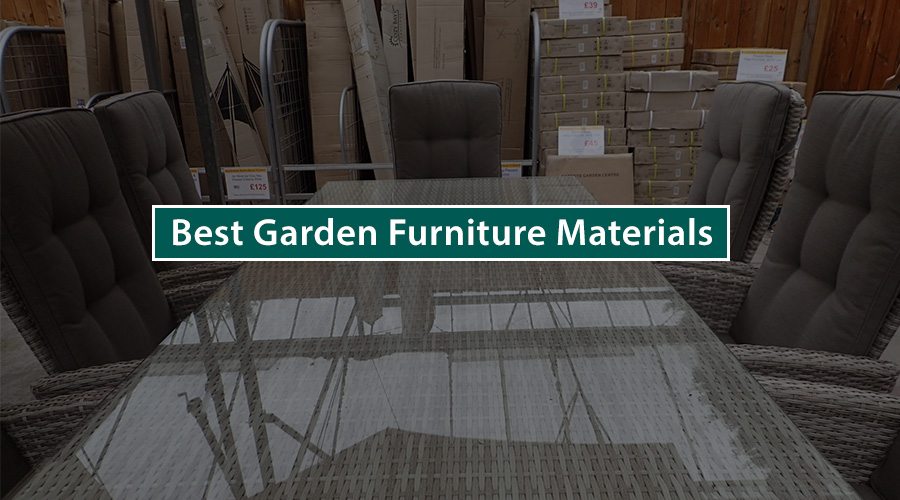
Rattan-effect aluminium is the best all-round garden furniture material for most UK gardens in 2026: a well-made set lasts 10 to 15 years outside, the frame cannot rust, and it asks for little more than a wipe-down each spring. That is the short answer, and we should declare an interest. We have sold garden furniture since 2001, we stocked wood and metal along the way, and today rattan-effect aluminium is all we sell. So below we set out honestly where hardwood and metal still beat it, what each material costs to keep, and who we would point elsewhere.
Here is the comparison at a glance, then we take each material in turn.
| Material | How long it lasts | Upkeep | Weight | Typical price | Best for |
|---|---|---|---|---|---|
| Rattan-effect aluminium | 10 to 15 years | Wipe down; store cushions over winter | Light | £394 to £1,774 | Year-round use with the least effort |
| Powder-coated steel | 5 to 10 years | Touch up chips before rust takes hold | Medium to heavy | £150 to £600 | Small budgets, balconies, bistro corners |
| Cast aluminium | 15 to 20 years | Wash down; repaint after many years | Heavy for its size | £300 to £1,500 | Windy, exposed gardens; traditional looks |
| Hardwood (teak) | 15 to 25 years | Oil yearly, or accept the silver-grey patina | Heavy | £500 to £3,000 | Owners who enjoy the upkeep ritual |
| Softwood (pine) | 3 to 7 years | Treat with preservative every year | Medium | £100 to £400 | Covered spots and short-term budgets |
Which material lasts longest outside?
Materials differ widely: oiled teak can pass 20 years, cast aluminium similar, rattan-effect aluminium gives 10 to 15, steel five to ten, softwood far less.
Teak excels at raw lifespan; rattan-effect aluminium trails it there but wins on effort. What kills garden furniture in Britain is rarely the rain itself: it is rust in steel, rot in cheap timber, and sunlight turning poor plastics brittle. Aluminium cannot rust, which is why cast sets and aluminium-framed rattan both cope with being left out all year. Steel sits bottom of the pile, because once the powder coating chips, moisture gets underneath and works outward from the welds. Guarantees tell you what a maker really expects: one year is typical across this trade, and we back our sets with a 3-Year Guarantee because the frames and weave have earned it.
How much upkeep does each need?
Upkeep ranges from a spring wipe-down for rattan-effect aluminium to yearly oiling for teak, yearly preservative for softwood and rust patrol for steel.
Aluminium-framed rattan excels in a wet British winter, staying outside uncovered; hardwood lags here, wanting oil before the frosts. Be honest with yourself about which owner you are. Teak needs oiling once a year to keep its colour, and softwood needs preservative every single year or it rots at the feet first. Steel wants an inspection each spring: find a chip, touch it up, and it lives on; miss it, and rust spreads under the coating. Our rattan-effect sets ask the least of you: hose the weave down when the pollen settles, and give the cushions a dry spot from November to March. The weave and frame themselves stay out in frost, rain and snow without a cover.
Is wooden garden furniture worth it?
Wooden furniture rewards owners who enjoy looking after it: teak lasts decades, ages into silver-grey, and can be sanded back, but demands yearly work.
Wood is the material we respect most and recommend least often. Nothing else looks as natural in a cottage garden, and nothing else can be renewed the same way: sand out the scratches, re-oil, and a 15-year-old teak bench comes up handsome again. A woven set cannot be refinished like that. Weight works in wood’s favour too, because a teak table stays put in gusts that slide lighter furniture across the patio. The trade-offs are real: a proper teak dining set often costs more than £1,000, it is heavy to shift for mowing, and the yearly oiling gets skipped in busy households. Cheap softwood is the false economy of this whole market: £100 now, rotten feet in three or four winters.
When is metal the better buy?
Metal earns its place at both ends: steel bistro sets cost less than any material, while cast aluminium shrugs off gales that shift lighter sets.
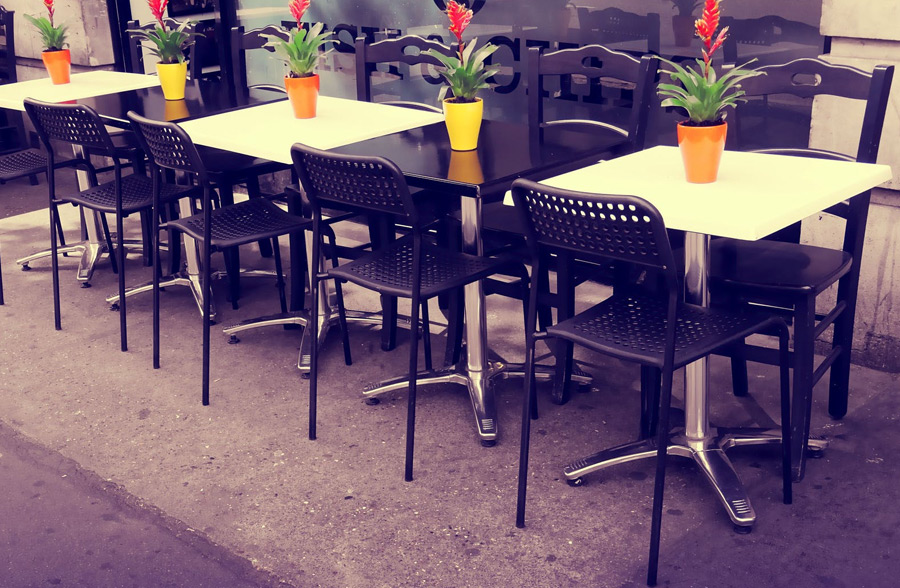
Steel wins on price; it loses the moment the coating chips. If the budget is £150 and the space is a balcony, a steel bistro set does the job and we would not talk you out of it, just keep touch-up paint handy and expect five to ten years. Cast aluminium is the quiet achiever of the metal world: it cannot rust either, and because it is heavy for its size it excels on exposed, windy plots, where our own woven sets, being light, can shift in a gale if left unanchored. The drawbacks are comfort and temperature. Bare metal seats are cold in April and hot in July, so you end up buying cushions anyway, and the traditional lace-pattern castings suit period gardens better than modern patios.
Why do we sell rattan-effect aluminium?
Rattan-effect aluminium won us over after 25 years in the trade: frames cannot rust, the weave lives outside all year, and cushioned comfort comes standard.
We sold wooden and metal ranges in our early years, and the material that kept customers happiest was aluminium-framed rattan, so that is what we make now under our own brand, which keeps the spec high and the prices reasonable. Ours is woven from 0.2mm-thick strands, double the 0.1mm most of the trade uses, which is what stops a seat panel sagging after two summers. Every set comes with the 3-Year Guarantee, Delivery Included and a 30-day money back guarantee, and most are available ready assembled. We hold 4.4 stars from 2,561 Google reviews. Sets run from £394 for a bistro up to £1,774 for a large sofa lounge. You can browse the full rattan range with current prices, or compare shapes side by side in our garden lounge sets range, which groups the larger seating sets together.
Who should not buy rattan-effect?
Rattan-effect suits most gardens but not every buyer: some plots, budgets and tastes are honestly better served by timber or metal instead.
We would rather point you elsewhere than sell you the wrong set. Not ideal for:
- Period and cottage gardens. A woven grey sofa can look out of place against old brick; an oak bench or a cast-aluminium set sits more naturally.
- Exposed, gale-prone plots. Our sets are light to move, which cuts both ways; cast aluminium or teak stays put in wind that would shift a woven armchair.
- The tightest budgets. A steel bistro set costs about £150; our bistro sets start at £394.
- Anyone wanting furniture to restore and hand down. Teak can be sanded and re-oiled for 25 years or more; a woven panel cannot be refinished.
Which material should you choose?
Material choice comes down to three questions: how much upkeep you will honestly do, how exposed the garden is, and what you want to spend.
If you want furniture that lives outside all year and asks nothing beyond a wipe-down, choose rattan-effect aluminium. If lifespan and looks matter more than effort, and the yearly oiling will genuinely happen, teak will outlast everything here. If budget rules, steel; if wind rules, cast aluminium. And if you are within reach of Leicestershire, the quickest way to decide is to sit on the real thing: come and try the sets at our Sapcote showroom, open seven days a week. We only display what we sell, so it is rattan-effect aluminium you will be sitting on, but ten minutes on a sofa set tells you more than any comparison guide, ours included.
Frequently asked questions
Is rattan-effect garden furniture just plastic?
Rattan-effect garden furniture is woven from polyethylene resin strands over a metal frame, so the weave is a plastic, and the same product is sometimes sold as resin wicker. Quality hangs on strand thickness: our sets use 0.2mm strands, double the 0.1mm typical elsewhere, which is the difference between a weave that sags and one that lasts.
Does metal garden furniture rust?
Metal garden furniture rusts only if it is steel or iron: once the powder coating chips, moisture creeps underneath and rust spreads, faster still in coastal air. Aluminium cannot rust at all, whether cast into a bench or used as the frame inside a rattan-effect set, which is why it suits British weather so well.
How long does wooden garden furniture last?
Wooden garden furniture lasts anywhere from 3 to 25 years depending on the timber. Teak that gets its yearly oil can reach 20 to 25 years, and the silver-grey colour it turns when left untreated is cosmetic rather than rot. Softwood such as pine manages 3 to 7 years outdoors even with yearly treatment.
Can rattan-effect furniture stay outside in winter?
Rattan-effect furniture with an aluminium frame stays outside all winter without a cover: the frame cannot rust and a well-made weave shrugs off frost and rain. Cushions are the exception and belong somewhere dry from November. Ours carries a 3-Year Guarantee, and the display sets at our showroom sit out in all weathers year-round.